
Swollen Face or Throbbing Tooth? Don’t Wait It Out.
A tooth abscess is a pocket of pus from a bacterial infection, and it won’t go away on its own. Home care can ease the pain, but treating the tooth is what fixes it. A swollen face is a dental emergency. We keep time open every weekday for emergencies here in Spring Hope, and we’ll do our best to see you the same day, so call or text (252) 478-3422. If swelling is making it hard to breathe or swallow, call 911 first.
Written by the Spring Hope Family Dentistry team and reviewed by Dr. Elie Abboud, DDS, based on guidance from the American Dental Association, Mayo Clinic, Cleveland Clinic and the UK’s National Health Service.
First, Check for These Warning Signs
Swelling from a tooth infection can spread, and a few signs mean you need a hospital before you need a dentist. If any of these fit, go to the nearest emergency room now or call 911, and don’t drive yourself there.
Trouble breathing or swallowing
Any trouble breathing, swallowing or speaking, or drooling. Call 911 right away.
Swelling that’s spreading or severe
Swelling that spreads toward your eye, down your neck, or under your tongue and jaw. A swollen or painful eye, or changes in your vision. A lot of swelling inside your mouth, or swelling that makes it hard to open your mouth.
A fever, confusion or a racing heart
A fever of 100.4°F or higher along with a swollen face. Feeling confused, or a heart that’s beating fast.
Go to the ER, too, if bleeding won’t stop with firm pressure, or if your jaw won’t close or may be broken. And if jaw or tooth pain comes with chest discomfort, shortness of breath or light-headedness, call 911. It can be a heart attack.
After hours or on a weekend? Text us at (252) 478-3422 and we’ll reply as soon as we’re open. Our hours are Monday 7:30 to 4:30, Tuesday and Wednesday 7:30 to 5:30, and Thursday and Friday 7:30 to 3:30. If your face is swollen or you have a fever and we’re closed, don’t wait for us to open. Go to the ER. If it’s pain that medicine isn’t helping, urgent care or the ER can help until we open. If you have any of the warning signs above, don’t wait for us. Go to the ER or call 911. The ER can give you medicine, but it can’t repair teeth, so come see us as soon as we open.
Signs and Symptoms of a Tooth Abscess
You might notice one or two of these, or several at once. Don’t go by pain alone. It can stop because the nerve inside the tooth has died, while the infection keeps spreading.
- Throbbing pain. It can spread from the tooth to your jaw, neck or ear.
- Swelling in your face or gums. A swollen face is a dental emergency, so call us right away.
- A fever. Check your temperature. A fever of 100.4°F or higher with a swollen face is a reason to go to the ER.
- Tender glands in your neck. They feel sore when you press on them.
- A pimple-like bump on your gum. Leave it alone. Never try to pop it.
- A bad taste, or a sudden salty rush. If an abscess bursts, foul, salty fluid drains into your mouth and the pain eases. It still needs treatment.
Tooth pain with no swelling, fever or gum bump? Our toothache page covers relief at home and what different kinds of pain can mean. For a broken tooth or any other urgent problem, start at our emergency dentistry page.
What to Do at Home Until You’re Seen
Home care can take the edge off, but it can’t cure an abscess. Use it to stay comfortable until your visit, not in place of one.
- Take ibuprofen or acetaminophen as the label directs.
- Rinse with warm salt water: half a teaspoon of salt in 8 ounces of warm water. Swish for about 30 seconds, then spit. Skip this for young children, who may swallow it.
- Hold ice wrapped in a towel on the outside of your jaw for about 20 minutes at a time, several times a day.
- Eat soft foods and chew on the other side.
- Avoid very hot or very cold food.
- Brush gently with a soft toothbrush.
Skip these:
- Heat on your face, like a heating pad or a warm compress. Use cold instead. None of the medical sources we follow recommend heat.
- Popping or squeezing a bump on your gum. Never try it.
- Aspirin or any painkiller placed on the tooth or gum. It can burn the tissue.
- Clove oil. It can burn your gums, it’s toxic to children if swallowed, and it affects how your blood clots.
- Numbing gels with benzocaine, unless your dentist or pharmacist says it’s OK. Benzocaine is linked to a rare reaction that can be deadly, and it should never be used on a child under 2.
A few cautions with pain relievers:
- Stick to the label dose. With acetaminophen, take only one product that contains it at a time, and don’t take it if you have 3 or more alcoholic drinks a day.
- Ask your pharmacist or dentist before taking ibuprofen and acetaminophen together.
- Check with your doctor before taking ibuprofen if you take blood thinners, have had stomach ulcers or bleeding, a heart attack or a stroke, or have heart or kidney disease or asthma. If you’re pregnant or have liver disease, ask your doctor before taking either one.
- For a child, pain relievers are dosed by age and weight, so follow the label or ask your pharmacist. Don’t give aspirin to anyone under 16 unless their doctor says to.
Why Antibiotics Alone Won’t Fix It
When a tooth is throbbing, a quick prescription sounds like the answer. We get it. But antibiotics don’t get rid of the cause of a tooth infection, which is the tooth itself. What fixes it is treating the tooth. That means draining the abscess so the pus can come out, cleaning out the infected canal inside the tooth with a root canal, or taking the tooth out.
That’s why the American Dental Association’s 2019 guideline, endorsed by emergency physicians, advises against antibiotics for most tooth pain and for swelling that stays inside the mouth. It puts a root canal or drainage first. The American Association of Endodontists says the same thing: the key is cleaning out the canal and draining the infection.
When antibiotics are part of the plan:
- You have a fever or feel generally unwell
- The infection is spreading, like swelling that’s moving into your face or neck, or swollen glands in your neck
- Your immune system is weak
Even then, they go alongside treating the tooth, not in place of it.
Sources: American Dental Association guideline on antibiotics for dental pain and swelling (2019, written for adults whose immune systems aren’t seriously weakened), American Association of Endodontists, Cleveland Clinic and Mayo Clinic.
Got antibiotics from urgent care or the ER? Take them exactly as prescribed. Feeling better doesn’t mean the tooth is fixed, because antibiotics don’t remove the cause. The ER can give you medicine, but it can’t repair teeth. Call or text us at (252) 478-3422 so we can treat the tooth itself.
How We Treat a Tooth Abscess
Every infection is a little different, but a visit for an abscess here usually goes like this.
- 1
We find the tooth behind it
We check the swelling and your gums, tap gently on your teeth, and test how they react to hot and cold. These simple tests help us narrow down which tooth is causing the trouble.
- 2
We take X-rays, and a 3D scan when it helps
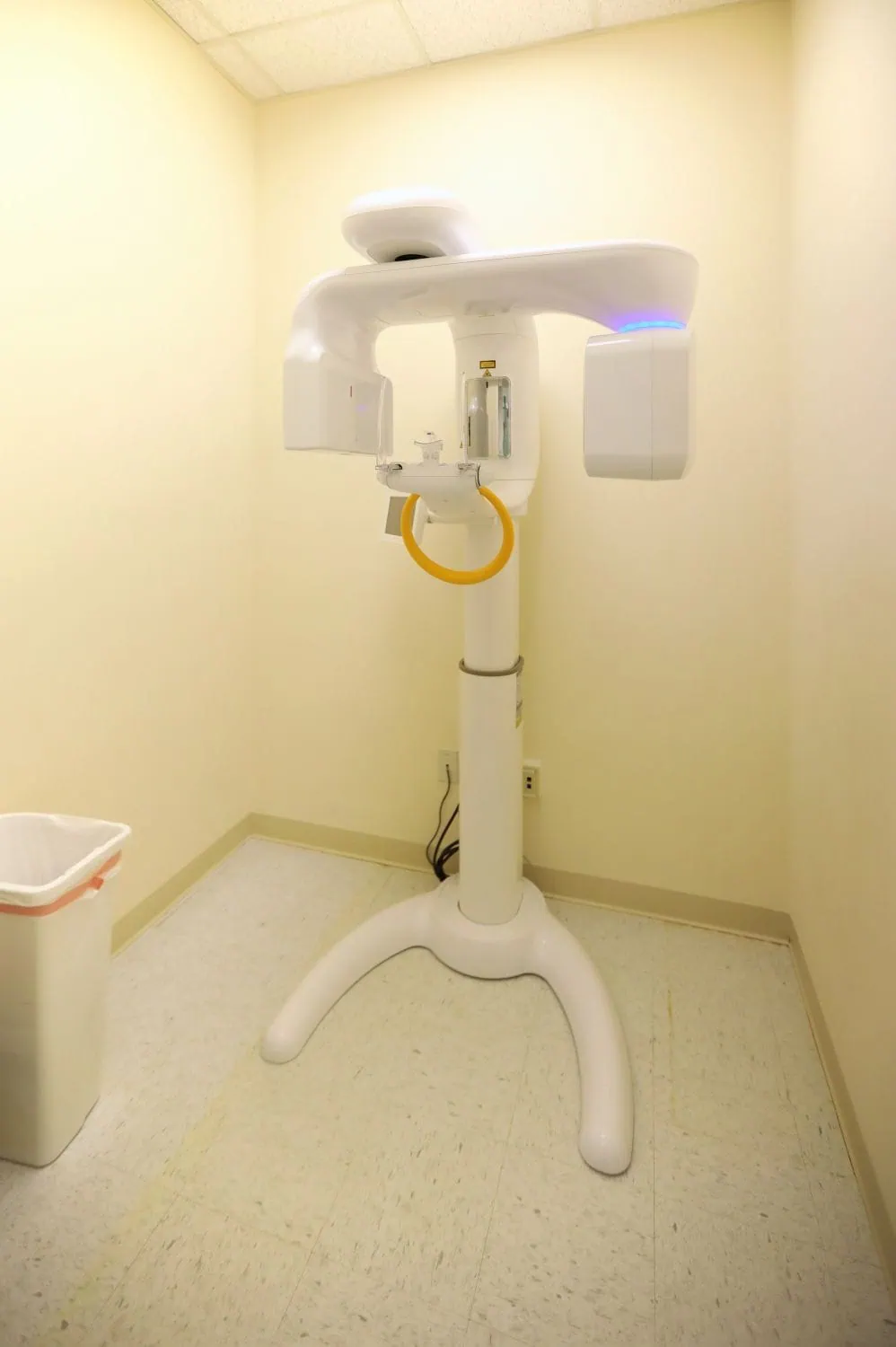
X-rays help us see the tooth and the bone around its root. When we need more detail, our cone beam (CBCT) scanner shows the tooth, the root and the bone around it in three dimensions, right here in the office. Swelling that’s spreading into your neck is different: that’s an ER visit, where a medical CT scan can show how far it has gone.
- 3
We drain the infection
Draining the abscess lets the pus out. Along with cleaning out the inside of the tooth, it’s the key to clearing the infection.
- 4
We save the tooth when we can
If the tooth can be saved, a root canal cleans the infection out of the canal inside it. It usually takes one or two visits and is usually followed by a crown (a cap over the tooth), and it’s no more painful than getting a filling. Dr. Abboud and Dr. Hilary both do root canals, back teeth (molars) included, and most are done right here.
If the tooth can’t be saved, we take it out. Tooth extractions are usually done here in the office too.
- 5
We add antibiotics only when they’re needed
If the infection is spreading, like swelling moving into your face or neck or swollen glands in your neck, or you have a fever, feel unwell or have a weak immune system, we may prescribe antibiotics as well. They work alongside the treatment, not instead of it.
Nervous about treatment? We offer laughing gas (nitrous oxide) and oral sedation to help you relax. We don’t offer IV sedation or general anesthesia. And if your gums turn out to be part of the problem, we’ll walk you through gum treatment too.
Can a Tooth Infection Spread?
Yes. Left untreated, a tooth infection can spread to your jaw, your neck and your sinuses, and it can lead to sepsis. Rarely, it reaches the brain or the heart. The risk is higher if your immune system is weak.
How fast is hard to say. Spread can take days, weeks or months, and there’s no way to predict it. That’s why the safest plan is to get the tooth treated instead of waiting to see what happens.
Pay extra attention to a lower back tooth (a molar). Over 90% of cases of Ludwig’s angina, an infection in the floor of the mouth under the tongue, come from an abscessed lower molar. Call 911 for drooling, trouble swallowing or breathing, or swelling in your neck. An infected flap of gum around a wisdom tooth (pericoronitis) can also lead to it, and our wisdom tooth pain page covers that problem.
Prompt treatment cures most tooth infections, and the tooth can often be saved.
Frequently Asked Questions
Will a tooth abscess go away on its own?
No. A tooth abscess won’t go away on its own. If it bursts, foul, salty fluid drains out and the pain eases, but it still needs treatment. Home care can make you more comfortable until your visit, but it can’t cure the infection.
Will antibiotics cure a tooth infection?
No. Antibiotics don’t remove the cause of the infection, which is the tooth itself. Dental treatment does: draining the abscess, a root canal, or taking the tooth out. Antibiotics are added when the infection is spreading, like swelling moving into your face or neck, when you have a fever or feel unwell, or when your immune system is weak.
My pain stopped. Am I OK?
Not necessarily. Pain can stop because the nerve inside the tooth has died, while the infection keeps spreading. It can also ease when an abscess bursts and drains. Either way, the infection still needs treatment, so keep your appointment or call us to make one.
Is a swollen face a dental emergency?
Yes. Call or text us at (252) 478-3422 right away. If we’re closed, go to the ER. Go to the ER or call 911 first if the swelling is spreading toward your eye or down your neck, if you have trouble breathing, swallowing or speaking, or if you have a fever of 100.4°F or higher with the swelling.
How long can a tooth abscess wait?
It shouldn’t wait. A tooth infection can spread over days, weeks or months, and there’s no way to know which it will be. We keep time open every weekday for emergencies, so call or text as soon as you notice swelling or a throbbing tooth.
Can a tooth infection spread to other parts of the body?
Yes. It can spread to your jaw, neck and sinuses, and it can lead to sepsis. In rare cases it reaches the brain or heart. The risk is higher if your immune system is weak. Prompt treatment cures most tooth infections, so don’t put it off.
Can you save the tooth?
Often, yes, especially when it’s treated promptly. Saving it usually means a root canal, which cleans the infection out of the canal inside the tooth. If the tooth can’t be saved, we’ll take it out and go over your options for what comes next.
Should I pop the bump on my gum?
No. Never try to pop a gum abscess, even if it looks like a pimple. Home remedies can ease the discomfort, but they can’t cure it. Call us so we can find where the infection is coming from and treat it.
What does it cost to treat a tooth abscess?
It depends on what the tooth needs, whether that’s draining, a root canal or an extraction. For new patients, the emergency exam and X-ray is $99, and VIP Plan members get one emergency exam a year included. If you need treatment, you’ll get the exact price in writing before we start, and we’ll file your insurance for you. Payment plans are available through Cherry, Sunbit and CareCredit.
Do I have to be a patient of yours to be seen?
No. Call or text (252) 478-3422, tell us what’s going on, and we’ll do our best to see you the same day. Calling or texting first is the fastest way in, and if you walk in, we’ll fit you in as the day allows. We see emergency patients from Spring Hope, Nashville, Rocky Mount, Wilson and the towns around them.
Tooth Abscess Care for Spring Hope and Nearby Towns
We see tooth infections from Spring Hope, Nashville (about 10 minutes), Rocky Mount (about 15), Wilson (about 20), Zebulon, Bailey and Middlesex, Bunn, Louisburg, Castalia, Elm City and Lake Royale. Call ahead and we’ll have a room ready.
Swelling or a Throbbing Tooth? Call or Text Us.
We keep time open every weekday for emergencies. An abscess won’t go away on its own, and the sooner it’s treated, the better the chance of saving the tooth.