
Most people who ask us about veneers have been thinking about it for years. A chipped front tooth they cover with their hand in photos. Staining that whitening never quite fixed. A gap they have made peace with but never stopped noticing.
Veneers are thin covers bonded to the front of your teeth. They change color, shape, and alignment in a way that whitening and bonding alone cannot. Below is a straight explanation of your options, what each one actually costs here, and how to tell which is right for you. We also give you a cosmetic consult at no charge, so you can get a real answer before spending anything.
What A Veneer Actually Is
A veneer is a thin shell, usually porcelain or a tooth-colored resin, bonded to the front surface of a tooth. It hides what is underneath and reshapes the tooth in one step.
People choose veneers for teeth that are: permanently stained or discolored, especially when whitening has not worked; chipped, worn down, or slightly broken; uneven in shape or noticeably smaller than the teeth around them; separated by small gaps; or slightly crowded or rotated, where the goal is appearance rather than a true bite correction.
If your teeth are significantly out of alignment, clear aligners are usually the better and more conservative route, and we will tell you so. Sometimes the best plan is aligners first, then one or two veneers to finish. See our clear aligners page for how that works. If it’s only your front teeth, the Inman Aligner can often straighten them in weeks first, so less of your natural tooth needs shaping.
Your Two Main Options, And The Honest Tradeoff
Porcelain veneers are made from a digital scan of your teeth. Porcelain is the material with the longest track record and it handles light beautifully. It is also the more expensive way to get there.
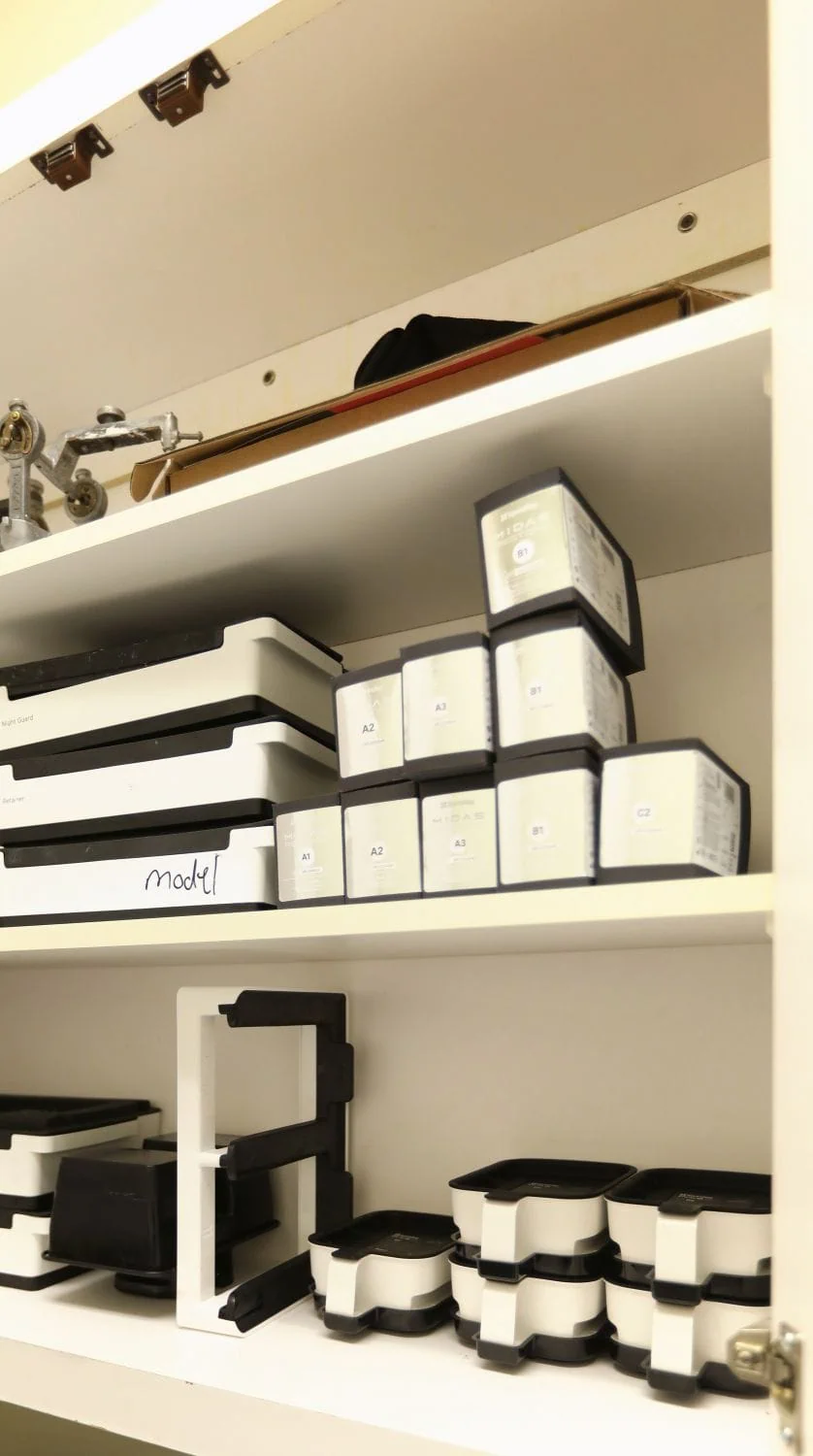
Composite veneers are built from a tooth-colored resin and shaped directly onto the tooth. They cost noticeably less, usually take fewer visits, and are easier to repair later. The tradeoff is that composite picks up stain over time and does not last as long as porcelain. One thing worth being clear about: our MIDAS printed veneers are not composite bonding. They are a definitive printed ceramic restoration, designed and printed in our office, as thin as 0.3mm and often with no drilling at all, at a price well below lab porcelain.
Neither is automatically the right answer. A single chipped tooth on a patient in their twenties is often a great composite case. A full front-eight makeover someone has been planning for a decade is where our MIDAS printed veneers and lab porcelain both make their case, and your scan tells us which fits.
There are two more choices worth knowing about. If you want as little drilling as possible, ask about no-prep and minimal-prep veneers. And because we design everything digitally, we can make veneers two ways — printed in-house on our SprintRay or crafted by a outside porcelain lab.
What Veneers Cost Here
Most dental sites will not put a number in front of you. Here is where ours start, per tooth:
| Option | Starting price (per tooth) |
|---|---|
| Composite veneer, shaped directly on the tooth | $1,049 |
| Porcelain veneer, lab-made | $1,634 |
A few honest notes. Veneers are priced per tooth, and most smile makeovers involve somewhere between four and ten teeth, so ask for the full number before you commit. VIP Membership Plan members save 20%. We offer financing through Cherry, Sunbit, and CareCredit so the cost can be spread monthly. And if you are weighing a plan from another office, bring your X-rays and the written plan for a second opinion at no charge.
Your exact number comes from a look and a 3D scan at your cosmetic consult, which is at no charge. For a full breakdown of what moves the price up or down, see our veneer cost guide.
What The Process Looks Like
1. Cosmetic consult, at no charge. We look at your teeth and gums, talk through what is realistic, and take a digital 3D scan. No goopy impression trays.
2. Planning your new smile. We design the shape and shade with you before any work starts. Want to actually wear your new smile before you commit? Ask about our $300 smile trial — a 3D-printed preview you take home for a few days, fully credited toward treatment.
3. Preparing the teeth. For porcelain, a very thin layer of enamel is usually removed so the veneer sits flush. Composite veneers often need little or no reduction.
4. Placement. Composite veneers are shaped and polished in the chair. Porcelain veneers are bonded once they come back from the lab.
5. Follow-up. We check the bite, polish the edges, and make sure the fit is comfortable.
Healthy teeth and gums come first. If there is decay or gum disease, we treat that before any cosmetic work, because a veneer bonded to an unhealthy tooth will not last.
Caring For Veneers
Veneers do not get cavities, but the tooth underneath still can, and the gum around it still matters. Brush and floss normally, keep your cleanings, and avoid using your front teeth as tools. If you grind at night, a nightguard protects your investment. Composite veneers stay brighter if you go easy on coffee, tea, and red wine, and they can be polished at recall visits.
Why Patients Across Nash County Come To Us For This
We are the only dental practice in Spring Hope itself, and patients drive in from Rocky Mount, Nashville, Wilson, and the surrounding towns. What they get here that a cosmetic-only office often cannot offer: digital scanning and in-house 3D printing, so planning is faster and there are no messy molds; a full-service dentist, which matters because cosmetic cases often need a filling, a crown, or gum treatment first, all handled by the same team; straight pricing, published above, with a cosmetic consult at no charge before you spend anything; and 500+ Google reviews at a 4.9 rating.
Dr. Abboud’s Take
The best money I’ve watched patients spend is on something they use every day. That’s a veneer case. Patients don’t rave about the ceramic; they tell me they stopped hiding their mouth when they laugh, that they smile in photos again.
We design the case around your face and your other teeth, so the result reads as you on your best day. The first consult costs nothing, and you can wear a printed preview home before deciding anything.
Elie Abboud, DDS
Do People Regret Getting Veneers?
Some do. Search the veneer forums and you’ll find “Veneers regret” threads sitting right next to “Was it worth it?” The regrets aren’t random. They come up for the same few reasons, and each one is decided before the first veneer is ever bonded.
They didn’t need them. Porcelain veneers usually mean removing a thin layer of enamel, and enamel doesn’t grow back. Trading healthy tooth for something whitening, bonding or a few months of aligners could have fixed is the regret that’s hardest to undo.
The design didn’t fit their face. Too white, too long, too bulky for the person wearing them.
They chased the lowest quote. A veneer that doesn’t fit the bite chips. One bonded over untreated decay fails early. Then you pay twice and lose more tooth in between.
Nobody explained the commitment. Veneers don’t get cavities, but the tooth underneath still can. If you grind at night, they need a nightguard. And no veneer lasts forever, so plan on replacing them someday.
Here’s how we try to make sure you never write one of those posts. Before we touch a tooth, you can wear a 3D-printed Smile Trial at home for a few days, in your own mirror and your own lighting, and hear what your family thinks. It’s $300, credited in full if you go ahead. If it’s mostly your front teeth that are crooked, straightening them first with the Inman Aligner or clear aligners can mean less shaping, or fewer veneers. And our printed veneers can be as thin as 0.3mm, often with no drilling at all.
I’d rather talk you out of veneers than put them on teeth that didn’t need them. If whitening or a little bonding gets you the smile you want, I’ll tell you, and it will cost a fraction of the price.
— Dr. Elie Abboud, DDS
Frequently Asked Questions
How much do veneers cost in Spring Hope, NC?
Composite veneers start at $1,049 per tooth and porcelain veneers start at $1,634 per tooth. Because most smile makeovers involve several teeth, we give you the full number at your cosmetic consult. VIP members save 20%, and financing is available through Cherry, Sunbit, and CareCredit.
How long do veneers last?
It depends on the material and how you care for them. Porcelain generally outlasts composite, and both do best when you keep up your cleanings, avoid biting hard objects, and wear a nightguard if you grind. We will give you a realistic expectation for your specific case.
Do veneers ruin your teeth?
Porcelain veneers usually require removing a thin layer of enamel, which does not grow back, so it is a permanent commitment. Composite veneers often need little or no reduction, and no-prep options exist for the right cases. We walk you through exactly how much preparation your case needs before you decide.
Veneers or whitening, which do I need?
If your teeth are healthy and well-shaped and you only want them brighter, whitening is far less expensive and less invasive. Veneers make sense when you also want to change shape, close gaps, or cover staining that whitening will not lift. See our teeth whitening page.
Does insurance cover veneers?
Veneers are usually considered cosmetic, so most plans do not cover them. If a tooth is broken or decayed, part of the treatment may be covered. We check your benefits and tell you what applies before you start.
Do you charge for the cosmetic consult?
No. The cosmetic consult is at no charge, and so is a second opinion on a plan you are weighing from another office, as long as you bring your X-rays and the written plan. You will leave knowing your options and your exact cost, with no obligation.
Ready To Talk About Your Smile?
Call or text us at (252) 478-3422 to book your cosmetic consult, and we will show you what is realistic for your teeth and your budget. We welcome new patients from Spring Hope, Rocky Mount, Nashville, and all of Nash County.
Ready When You Are
Reserve online in under a minute, and we file your insurance for you.