
One of the best parts of straightening your teeth with us is how little of it has to happen in our chair. With at-home clear aligner monitoring, you check your own progress from your phone every couple of weeks while we keep a close watch the whole way, without you driving in every month just to be looked at. It’s the convenience people want from aligners, plus the one thing the old mail-order kits never had: a real doctor watching. And it’s built into your $4,799 all-in treatment, not an upsell.
One honest note: we take 5 new aligner patients at the $4,799 rate each month, so every case gets the chair time it deserves. Once those spots fill, our regular $5,799 fee applies until a new month opens. Call or text (252) 478-3422 to check this month’s availability.
How at-home monitoring actually works
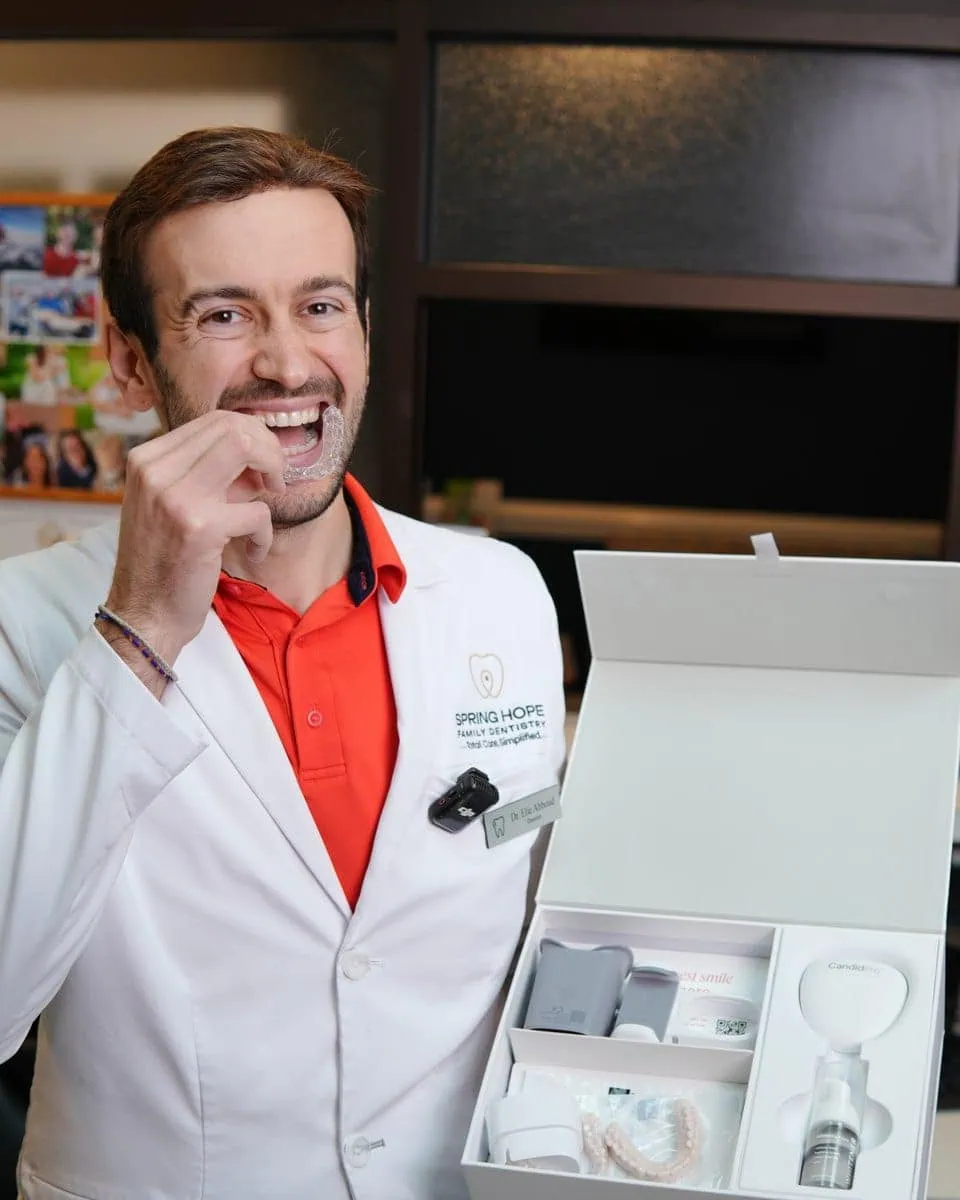
When you start treatment, we hand you a small ScanBox that holds your phone at the right angle. Every two weeks, you slot your phone in, open the app, and take a quick scan of your teeth. It takes a couple of minutes, right from your own bathroom.
That scan goes to FDA-cleared monitoring that reviews it and gives you one of two answers:
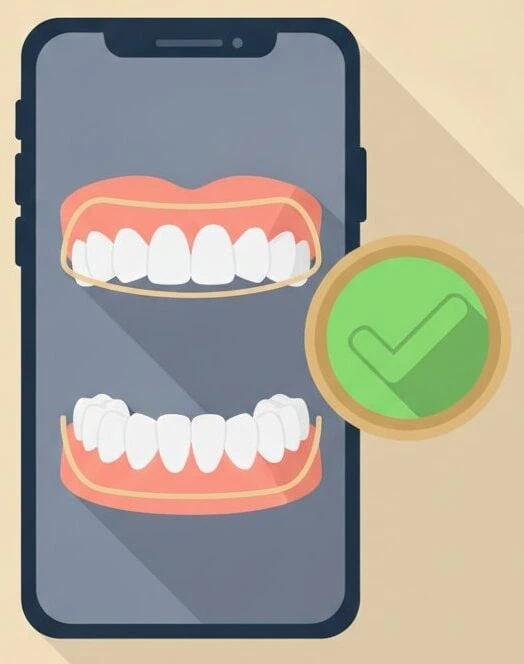
- Green light. Your teeth are tracking to plan. You’re cleared to move to your next tray, on schedule.
- Red light. Your teeth need a little more time. You stay on your current tray a few more days, scan again, and move forward once they’ve caught up.
That’s the point of scanning instead of guessing. Teeth don’t all move at the same pace, and this way we never advance you before yours are ready. The plan bends to your mouth, not the other way around.
You still have a doctor watching
This is the part that matters most, so we’ll say it plainly. Your monitoring is supervised by real people, not just an app.
A US-based licensed orthodontist helps plan and oversee your case from the start. Any time a scan gets flagged, your dentist, Dr. Abboud or Dr. Hilary, is notified and reviews it personally, and checks in on your progress periodically regardless. You’re never handed a box of trays and left to hope it’s working.
That combination is what makes remote monitoring worth trusting: orthodontic planning, a dentist keeping an eye on your whole mouth, and technology that flags a problem the moment it shows up.
Why this beats driving in every month
Traditional treatment has you back every five or six weeks so someone can look in your mouth and say “looks good, keep going.” At-home monitoring gives you three real advantages over that:
- Far fewer trips. You’ll still come in for the visits that count, but you won’t burn a morning driving in just to be checked. Most of that happens from your phone.
- Problems caught early. With a scan every two weeks, we spot a lagging tooth or a tray that isn’t seating within days, not two months later at your next appointment. Small corrections stay small.
- It keeps you honest. Aligners only work when you actually wear them, and it’s easy to get lax when nobody’s looking. Knowing a scan is coming keeps the trays in your mouth, which is where they need to be to work.
This is nothing like the old mail-order kits
You may have heard about the direct-to-consumer companies that mailed people aligners with no dentist involved. SmileDirectClub shut down. Byte suspended sales of its aligners. The common thread was simple: nobody qualified was watching, so problems went unnoticed until they turned into real damage.
At-home monitoring is the opposite. The convenience looks similar on the surface, since you’re scanning from home instead of sitting in a chair. But underneath it, a licensed orthodontist is on your plan and a dentist reviews anything that looks off. You get the convenience without giving up a doctor’s eyes on your teeth. That’s the trade we stand behind, and the one those kits never offered.
CandidPro explains the technology on their site, and we lay out every step on our Process & Timeline page.
It’s already included
You won’t see a separate line item for monitoring. It’s part of your $4,799 all-in clear aligner treatment, alongside all your aligners, every in-office visit, your retainers, and free take-home whitening. One published price, everything in it. See the full breakdown on our Clear Aligners page, or compare systems on CandidPro vs Invisalign.
Dr. Abboud’s Take
“Technology only matters to me if it makes your care better, not just flashier, and our monitoring does exactly that. It reviews every scan you send and gives you a green or red light on the spot, so nothing goes unnoticed for weeks. If something is flagged, I’m notified and review it myself, and I check in periodically regardless. It also means you’re not driving in every five or six weeks simply to be looked at. Just as importantly, it keeps you accountable, because these trays only work when you wear them, and knowing you’ll scan keeps them in. It’s the convenience patients want without giving up the one thing that truly matters: a doctor’s eyes on your teeth.”
Frequently Asked Questions
How does at-home monitoring work?
We give you a ScanBox that holds your phone, and every two weeks you take a quick scan through the app. FDA-cleared monitoring reviews it and tells you whether you’re on track for your next tray or need a few more days on your current one.
Do I still see the dentist?
Yes. A US-based licensed orthodontist helps plan and oversee your case, and your dentist (Dr. Abboud or Dr. Hilary) reviews anything a scan flags and checks your progress periodically. You’ll also come in for a handful of in-person visits. This is monitored care, not a box of trays with nobody watching.
How often do I scan?
Every two weeks, plus any time we ask you to re-scan after a red light. Each scan is quick, and it replaces most of the routine drive-in checkups you’d have with traditional treatment.
What is the green light and red light?
A simple on-track or not-yet signal. Green means advance to the next tray. Red means your teeth need more time, so you stay on your current tray, scan again in a few days, and move forward once they’ve caught up.
Is this the same as those mail-order aligners?
No. Companies like SmileDirectClub and Byte shipped trays with no real dental supervision, and both ran into serious trouble. Our monitoring gives you that same at-home convenience, but a licensed orthodontist plans your case and your dentist watches over it the entire way.
Ready to see if you’re a candidate?
Your 3D scan and X-ray are free, and you’ll leave knowing your exact all-in price. Call or text (252) 478-3422 or reserve online.
Spring Hope Family Dentistry straightens smiles for patients across Nash County, including Rocky Mount, Nashville, Wilson, Bailey, Middlesex, Elm City, Zebulon, and Bunn.
Ready When You Are
Reserve online in under a minute, and we file your insurance for you.