
When your clear aligners come off and your teeth are finally straight, you’re not quite done. Teeth naturally want to drift back toward where they started, so you need something to hold them in place. That’s what a retainer does. You have two basic choices, and patients ask us about both: a permanent retainer versus a removable retainer. Here’s the honest difference, and what we usually recommend.
What a permanent “lingual bar” retainer is
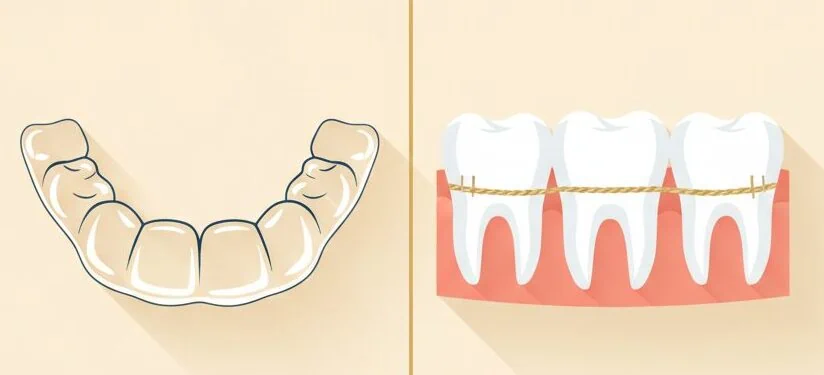
A permanent retainer, sometimes called a lingual bar or a bonded retainer, is a thin wire glued to the back of your front teeth. You can’t take it out; it stays put around the clock. Because it sits behind your teeth, no one can see it, and there’s nothing to remember to wear. That “set it and forget it” quality is its main appeal.
What a removable retainer is
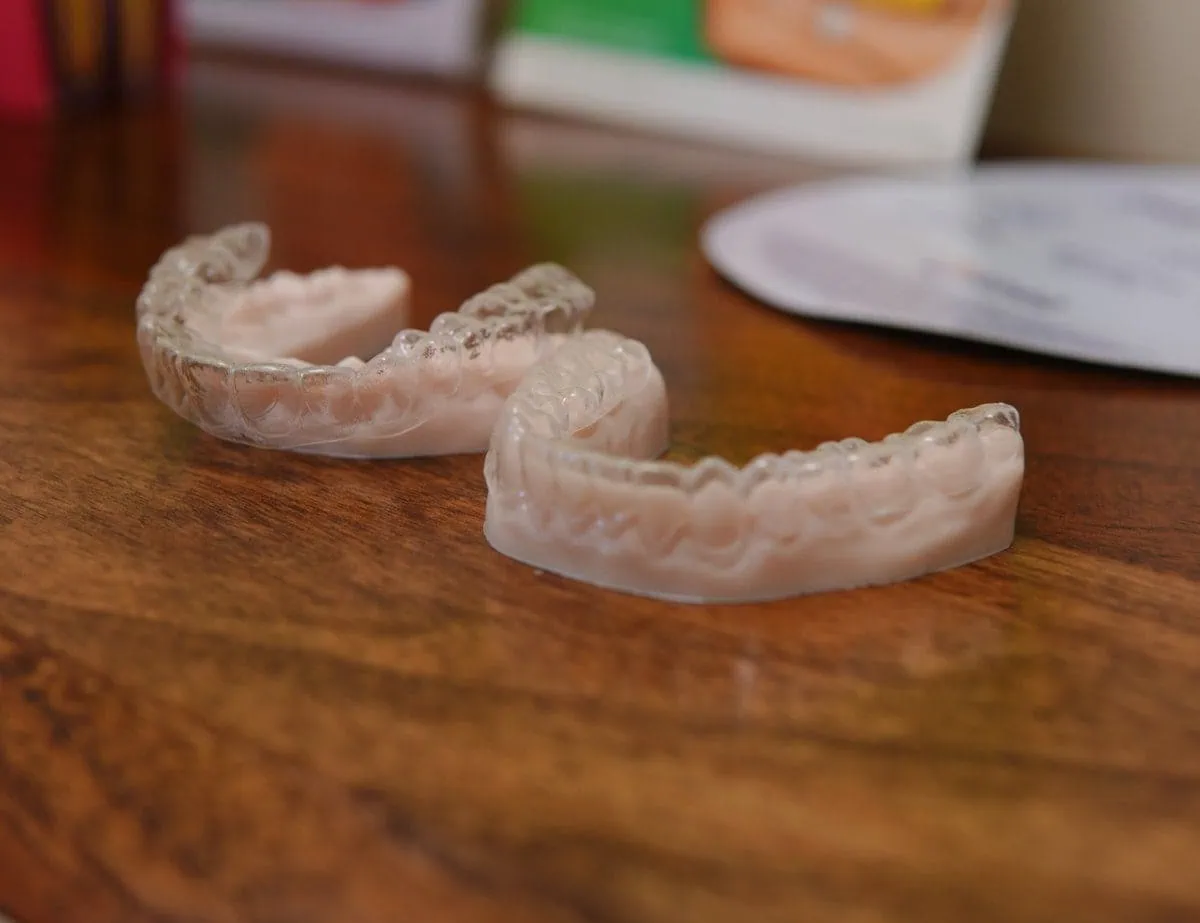
A removable retainer is exactly what it sounds like. It’s a clear tray that fits over your teeth, a lot like your aligners, or a classic Hawley retainer made of a thin wire and a small acrylic piece. You take it out to eat and to brush, then pop it back in, usually while you sleep. You’re in charge of wearing it, which is both the catch and the advantage.
The honest comparison
Both options keep your smile straight. They just ask different things of you. Here’s how they stack up:
| Removable retainer (clear tray or Hawley) | Permanent lingual bar (bonded wire) | |
|---|---|---|
| Hygiene | Brush and floss normally, and the tray lifts out to rinse clean in seconds. | A wire is bonded in the way, so it’s hard to clean around. Plaque and tartar build up along it, and that buildup is what causes most retainer problems. |
| Breakage risk | If you lose it or crack it, we simply replace it. | It can quietly de-bond or snap on hard, crunchy foods. If it does, your teeth can start shifting before you even notice. |
| Visibility | Clear trays are essentially invisible; a Hawley shows a thin wire. Either way, low profile. | Hidden behind your front teeth, so no one sees it. |
| Compliance | Works only if you wear it as directed, usually at night. | Always on. Nothing to remember or put back in. |
| Longevity | Wears over time and gets replaced as needed. | Can last years with diligent daily cleaning. |
For general guidance on caring for your teeth after orthodontic treatment, the American Dental Association is a solid, unbiased resource.
What we usually recommend
For most patients, we recommend a removable retainer. The reasons are practical: it’s easier to keep clean, and there’s no silent breakage that lets your teeth shift without you knowing. When a bonded bar comes loose behind your front teeth, most people don’t catch it for weeks, and by then the teeth have already started to move. A tray you take in and out sidesteps that problem entirely.
That said, some people do very well with a combination, a bonded bar for extra security plus a removable tray at night. Every mouth is different, so we’ll look at your case and tell you honestly what fits your teeth and your habits.
Either way, you’re covered. Your retainers are included in your clear aligner treatment at $4,799 all-in, so there’s no surprise cost when your trays come off. We walk through the whole journey, from your first scan to retention, on our Process and Timeline page.
One honest note: we take 5 new aligner patients at the $4,799 rate each month, so every case gets the chair time it deserves. Once those spots fill, our regular $5,799 fee applies until a new month opens. Call or text (252) 478-3422 to check this month’s availability.
Dr. Abboud’s Take
“Once your teeth are finally straight, I usually recommend a removable retainer over a permanent bonded bar, for a practical reason. That bar bonded behind your teeth is difficult to keep clean, and the plaque that builds around it is what causes problems down the road. Worse, if it breaks or comes loose without you realizing, your teeth can begin shifting before you notice. A removable retainer keeps things simple: take it out, clean it, and brush normally. For most people, it’s the safer choice over the long term.”
Frequently Asked Questions
Which retainer is better?
For most people, a removable retainer. It’s easier to keep clean, and there’s no hidden breakage that lets teeth drift back. Some patients do best with a combination of a bonded bar and a night tray, and we’ll tell you which fits your case after we look at your teeth.
Are permanent retainers hard to clean?
They’re trickier, yes. Because the wire is bonded behind your front teeth, you can’t floss the normal way, and plaque and tartar tend to collect along it. That buildup is the most common reason bonded retainers cause trouble down the road.
What if my bonded retainer breaks?
That’s the real catch with a lingual bar: it can come loose or snap on hard foods with no obvious sign. If it happens and you don’t notice, your teeth can begin shifting. Come see us right away if you feel a loose wire, and we’ll repair or replace it before your smile moves.
How long do I wear a retainer?
Think of retention as long term. Teeth drift for life, so most people wear a retainer nightly, more or less indefinitely. A removable tray gets replaced as it wears out, and a bonded bar can last years with careful cleaning.
Are retainers included in my treatment?
Yes. Retainers are part of your $4,799 all-in clear aligner price, right alongside your aligners, every visit, at-home monitoring, and free take-home whitening.
Ready to see if you’re a candidate?
Your 3D scan and X-ray are free, and you’ll leave knowing your exact all-in price, retainers included. Call or text (252) 478-3422 or reserve online.
Spring Hope Family Dentistry keeps smiles straight for patients across Nash County, including Rocky Mount, Nashville, Wilson, Bailey, Middlesex, Elm City, Zebulon, and Bunn.
Ready When You Are
Reserve online in under a minute, and we file your insurance for you.