
A Real Dental Lab, Right Here on Nash Street
Scanned, designed, printed and hand-finished in our Spring Hope office. Most printed dentures are ready in about three business days.
- 2 SprintRay printers
- Digital scans, no putty
- Most repairs next business day
Most dental offices do not make anything. They take an impression, put it in a box, and mail it to a lab in another state. Two or three weeks later a package comes back, and if the fit is wrong the whole trip starts over.
We built a lab instead. It sits in the same building as the treatment rooms at 615 E Nash Street in Spring Hope, and it is where your dentures, night guards, surgical guides and provisional teeth are designed, printed and finished. That one fact is behind almost everything patients notice about us: why a denture takes about three business days instead of three weeks, why a repair is usually ready the next business day, and why our prices look the way they do.
What Having the Lab In-House Changes for You
Three days, not three weeks
Most of our printed dentures are ready in about three business days. An outside lab runs two to three.
No impression trays
We scan instead. Nothing has to set in your mouth and nothing distorts on the drive to a lab.
Adjustments while you are here
If a fit or a shade needs changing, we change it that afternoon instead of booking you for next month.
Repairs by the next day
A cracked base or a lost denture tooth is usually back in your mouth the next business day, even if we did not make it.
A cheaper denture
There is no outside lab invoice to mark up. A printed arch starts at $1,266 where a lab-made one is $2,655.
Do-overs cost us, not you
Reprinting costs an afternoon and some resin. At an outside lab it costs weeks, which is why most offices talk you into living with it.
That last one is the part nobody says out loud. When a remake is expensive and slow, the pressure is on you to accept what came back. When it is cheap and fast, we can just make it right.
How Your Case Moves Through the Lab
Six steps, start to finish. For a straightforward denture the whole thing takes about three business days, and only two of them need you in the building.
- 1
Scan
A wand about the size of an electric toothbrush builds a 3D model of your mouth on screen in a few minutes. For full-arch implant cases we also record implant positions with photogrammetry, and for cosmetic cases we scan your face as well.
- 2
Design
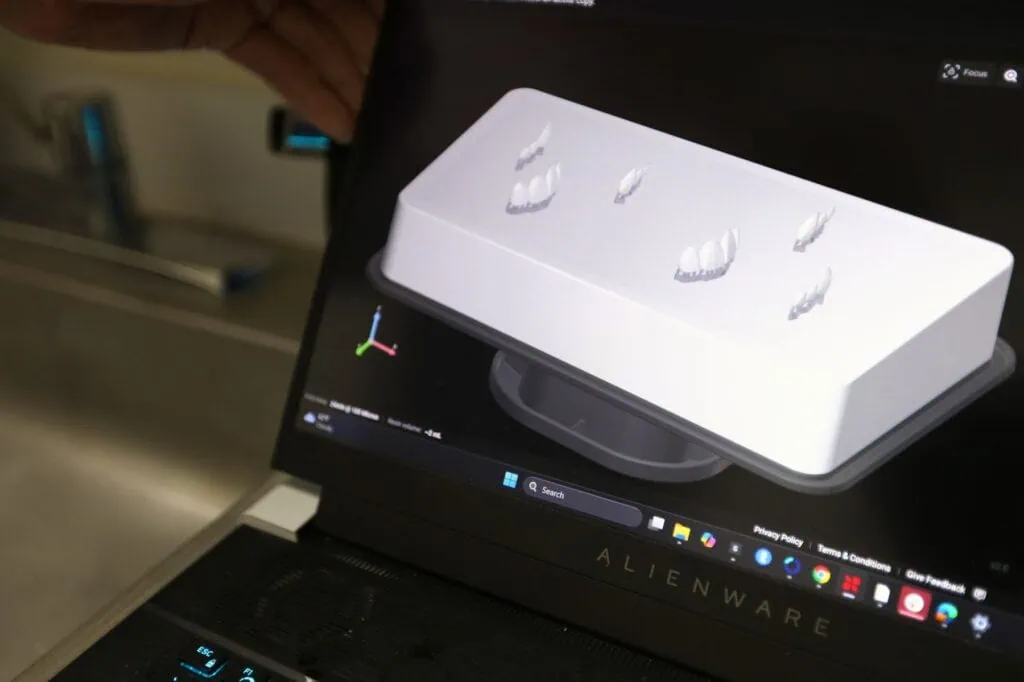
Dr. Abboud lays out the case on your scan: where the teeth sit, how they meet when you bite, the shape of the arch, how much support your lip gets. It can be changed as many times as it takes, because at this stage it costs nothing but time.
- 3
Print
The design goes to the SprintRay printer, which builds the piece up in layers from liquid resin. Most jobs run in under an hour.
- 4
Wash and cure
Printed resin comes out soft and has to be washed clean and then light-cured to full strength. Skipping or rushing this step is a common reason printed work fails elsewhere.
- 5
Finish by hand
Polished, then glazed and tinted to match your shade. This is the step that decides whether a denture reads as teeth or as dental work.
- 6
Deliver and adjust
You come in, we seat it, and anything that needs adjusting gets adjusted right then, with the lab twenty feet away.
Want to see it? Ask at your visit and we will walk you back and show you the printer with your own case on the screen. Patients from Rocky Mount and Wilson do this all the time. Call or text (252) 478-3422 or book online.
Designed Here, By Your Dentist
This is the part most patients do not expect. Dr. Abboud does the design work himself. Where the teeth sit, how they meet, the shape of the arch: those are clinical decisions, and at most practices they are made by a technician in another state who has never seen your face.
He has seen your face. He watched you talk and smile during the exam, and he is designing against that, not against a plaster model on a bench in another time zone.
Scanning Instead of Impression Trays
Nobody misses the trays. Everything in this lab starts from a scan, and we run three of them because different cases need different information.
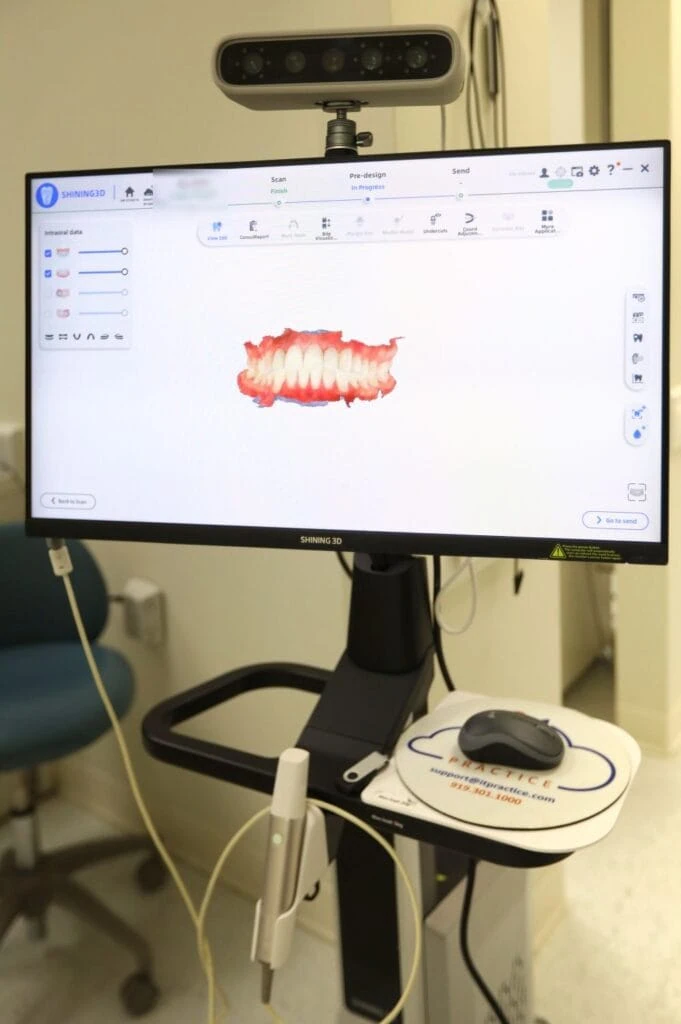
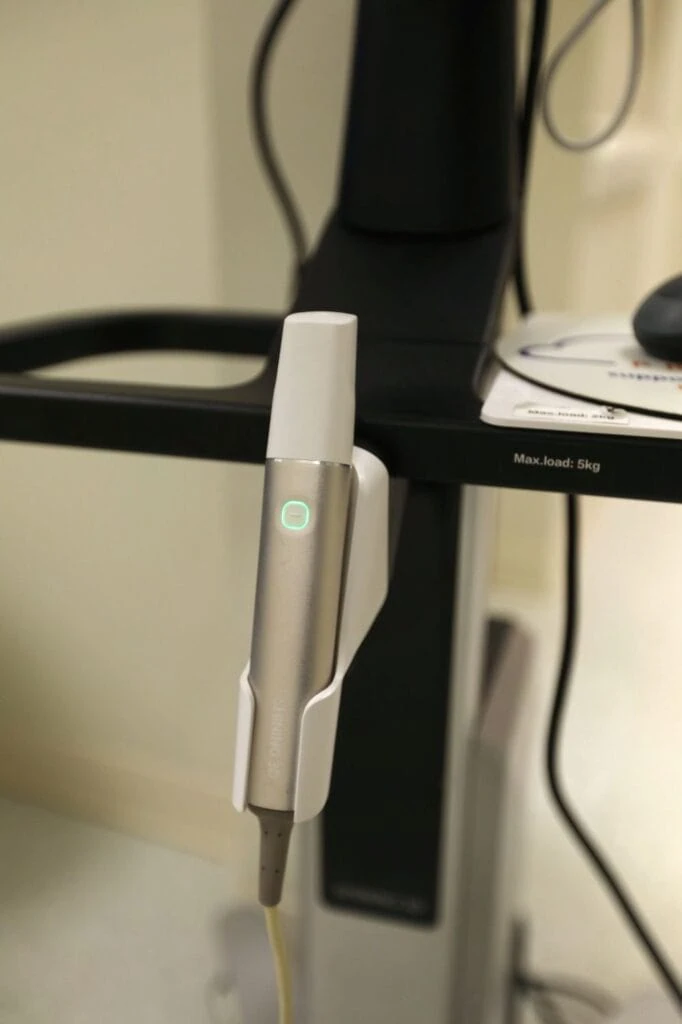
Intraoral Scanner
Shining3D AoralScan Elite
Our main scanner and the one every case starts on. It captures your teeth and gums in three dimensions in a couple of minutes, with no tray and nothing setting in your mouth. On full-arch implant cases it also does photogrammetry, which records the exact position of every implant in one pass. A full-arch bridge has to seat on four or five implants at once with no rocking, and that tolerance is past what a physical impression can hold.
For you: No gagging on a tray, and full-arch work that fits on the day of surgery.
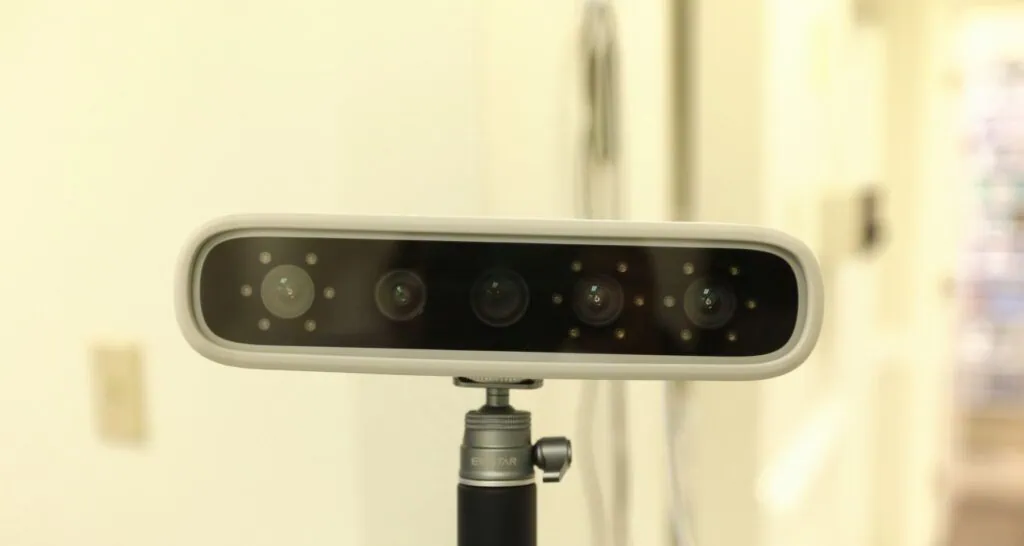
Facial Scanner
Shining3D MetiSmile
This one scans your face rather than your teeth. It builds a full-color 3D model of your features, and we design the new smile against that model instead of against teeth floating on a screen with no face around them. Your lip line, your midline and your facial proportions all end up in the design.
For you: A denture or a veneer set designed to suit your face, not just to look good on its own.
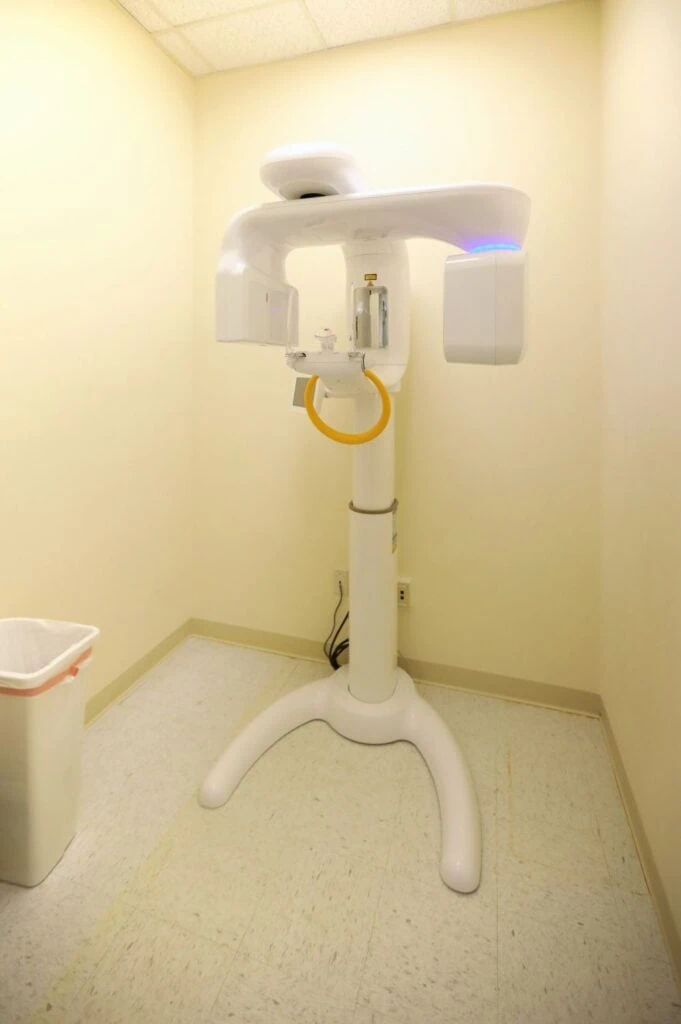
3D Imaging
CBCT 3D Scanner
A surface scan shows the outside. CBCT shows what is under it: bone height, bone width, nerve positions and sinuses in three dimensions. Every implant case is planned on one, and it is how a surgical guide gets designed to put an implant exactly where the plan says rather than where it looks about right.
For you: A definite answer on whether you have the bone for an implant, before you spend anything.
More on the chairside side of this on our technology page and our guided surgery page.
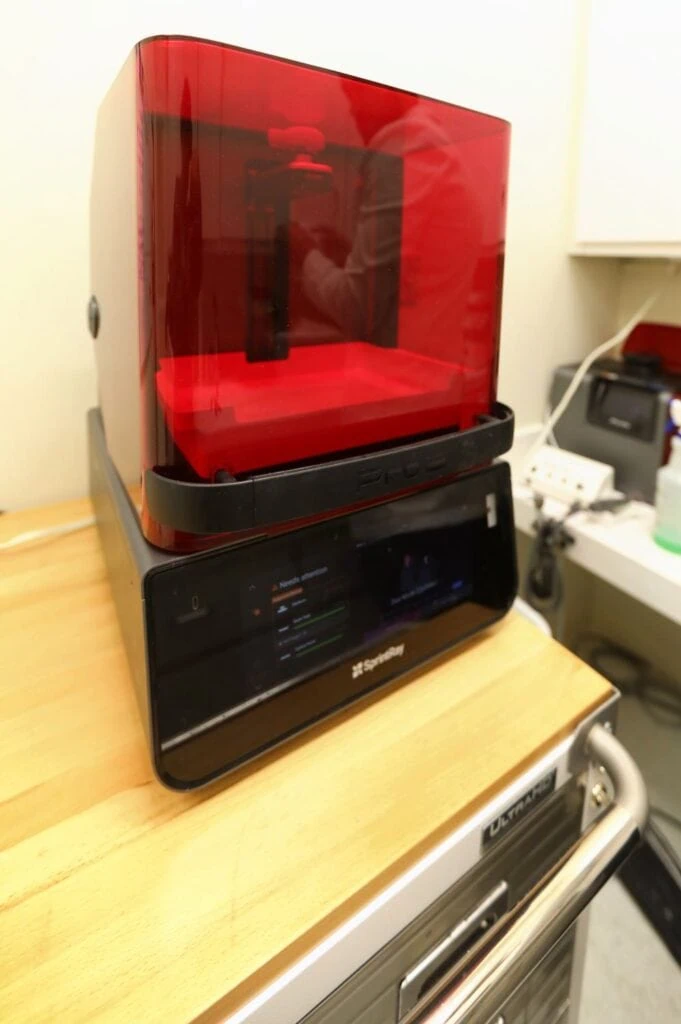
The Printer
3D Printer
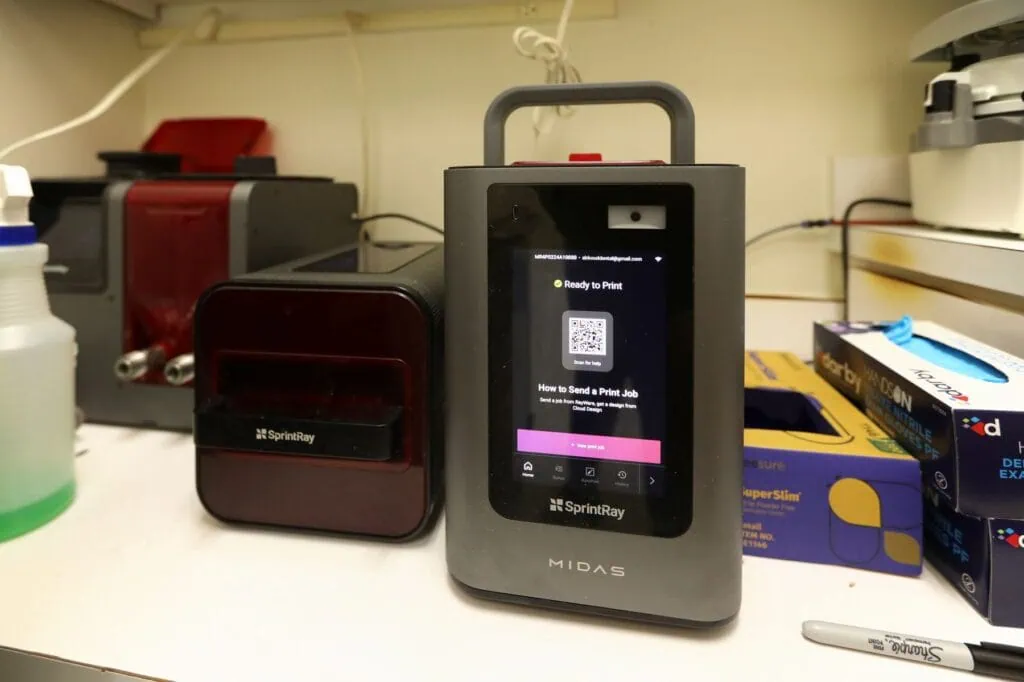
SprintRay Pro 2
The Pro 2 builds each piece up in layers from liquid resin, accurate enough that a printed denture base seats on gum tissue without the guesswork a poured mold introduces. Most jobs print in under an hour, which is the reason a denture that would take a lab two weeks takes us about three business days, and the reason a qualifying case can be scanned in the morning and delivered the same afternoon.
For you: Your case is made on our schedule, not a shipping company’s.
Restoration Printer
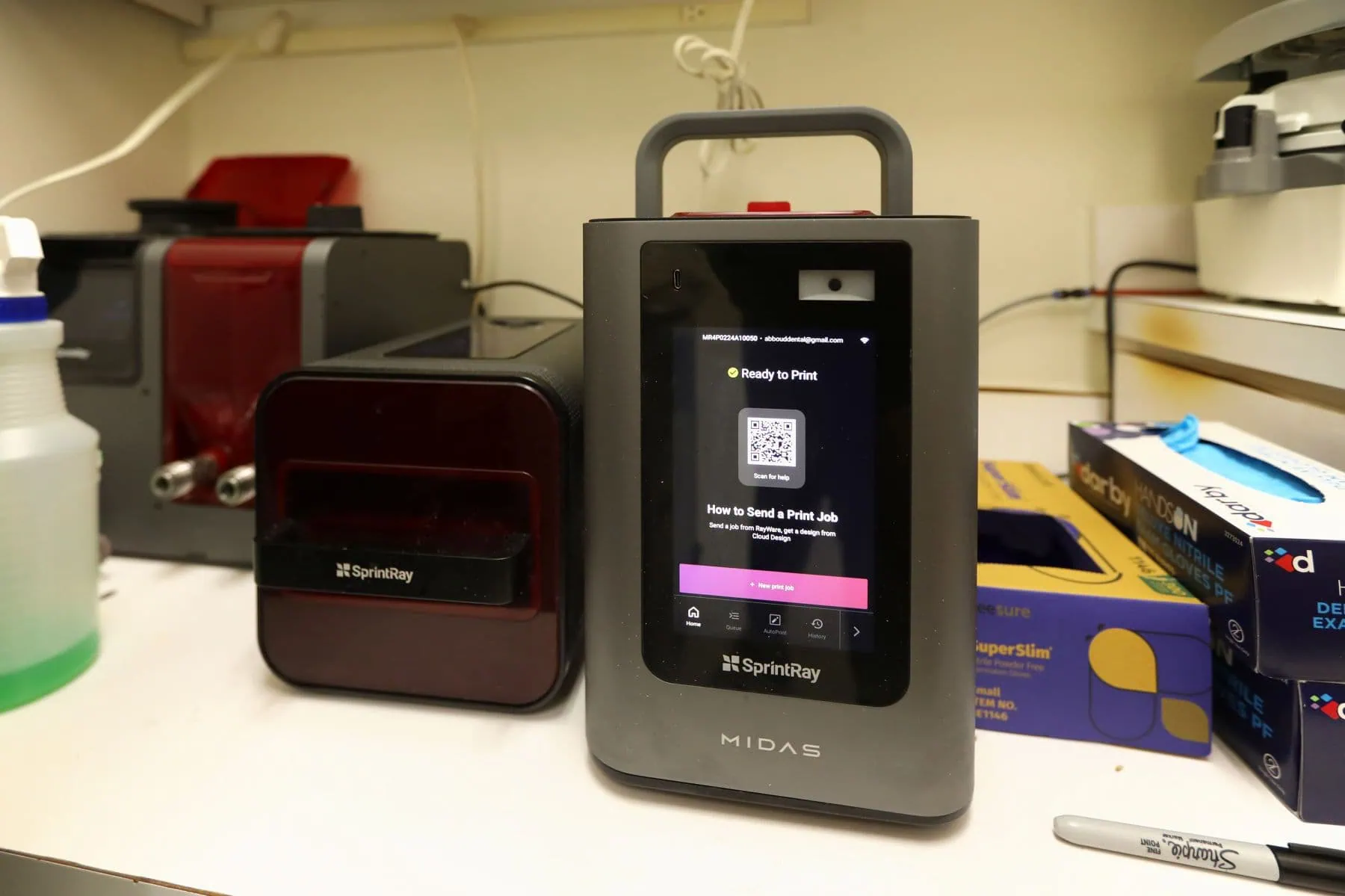
SprintRay Midas
A second printer handles tooth-colored work. The Midas prints our 3D-printed veneers from Midas Restore, a ceramic-filled resin that is FDA-cleared for permanent crowns, inlays, onlays and veneers. Each capsule is a tooth shade, so the color is picked to match your smile before anything prints.
For you: Veneers designed and printed here, not shipped out and waited on.
The Resins We Print In
The material matters as much as the machine. We keep four on hand and pick by the job rather than by what is already loaded.
- Apex Resin for denture bases, the pink part that rests on your gums. Our primary denture material.
- OnX Tough 2 for the denture teeth themselves, built to take years of chewing.
- Apex Flex for flexible partials, for patients who do not want metal clasps showing when they smile.
- NightGuard Firm 2 and NG Flexible 2 for night guards and bite appliances, firm or flexible depending on what your bite needs.
What We Print Here
- Full dentures and partial dentures, including flexible partials
- Immediate dentures, made before your extraction date so you never go without teeth
- Same-day dentures for qualifying cases
- Flippers and interim partials
- Fixed provisional teeth for All-on-X full-arch surgery
- Surgical guides for implant placement
- Night guards and bite appliances
- Kois deprogrammers for bite diagnosis
- 3D-printed veneers
- Denture repairs, relines and rebases, including dentures made at other offices
- Working models and try-ins
A Real Onlay From Our Midas


The Part No Machine Does
A printer makes a shape. It does not make a smile look like it belongs to you. Every case gets finished by hand at the bench: polished, then glazed with Glaze by Rodin and characterized with Ivoclar IPS Empress Direct tints to build in the shade, the translucency at the biting edge and the small irregularities that keep teeth from reading like a row of white tiles.
That is the step people are reacting to when they say a denture looks fake. It is almost never the fit. It is a technician who had thirty seconds and no idea what the patient looked like.
What We Do Not Make Here
Being straight with you is the whole point of a page like this, so here is the honest boundary.
We print. We do not mill, and we do not run a sintering furnace. That means zirconia crowns and bridges, and certain premium lab-made dentures, are made by an outside lab rather than by us, because those materials have to be cut from a solid block and fired rather than printed. We work with a small number of American labs we have used for years, and for those cases they are genuinely better than anything we could produce in this building.
What we will not do is send your case away and charge you as though we made it here. You will always be told which path your case is taking, and what it costs, before we start. Both routes are laid out with real numbers on the denture pricing page.
The Rest of the Bench
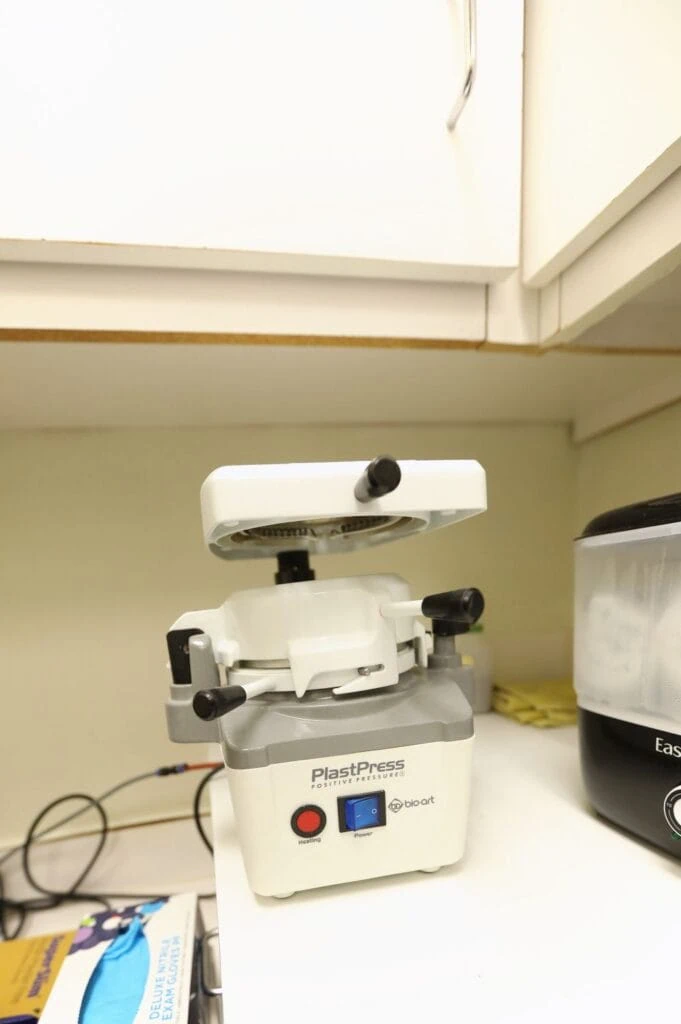
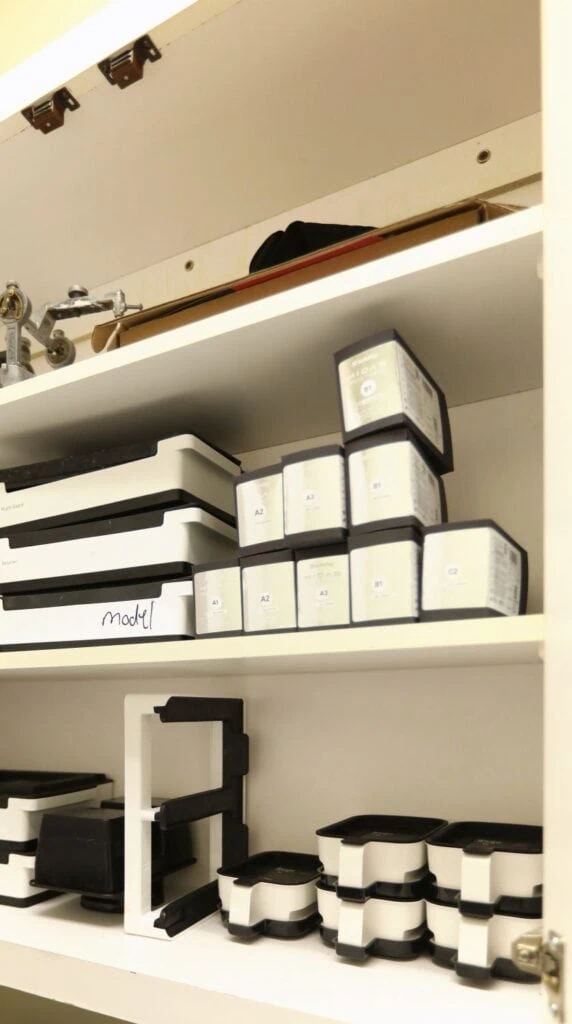
Around the printer sits the rest of what a digital lab needs: wash and cure units to bring printed resin to full strength, a polishing and hand-finishing bench, shade tabs and tints for characterizing, and the design workstation where cases are laid out before anything is made. Chairside, it is backed by CBCT 3D imaging and an intraoral camera, so what gets designed in the lab is built on a complete picture of your mouth rather than an educated guess.
Nobody Else Around Here Has This
In-house digital labs are still uncommon, and in Nash County they are close to nonexistent. Patients drive to us from Rocky Mount, Wilson, Nashville, Bailey, Middlesex, Elm City, Louisburg, Bunn, Castalia, Franklinton and Lake Royale, and the lab is a large part of why. Fifteen or twenty minutes of driving buys a denture in three days instead of three weeks, and a dentist who can fix it before you leave the building.
Frequently Asked Questions
Where are my dentures actually made?
Here, in our building at 615 E Nash St in Spring Hope. They are designed by Dr. Abboud on your digital scan, printed on our SprintRay Pro 2, and finished and glazed by hand at our bench. They are not shipped anywhere.
How long do 3D-printed dentures take?
Most are ready in about three business days. Outside labs generally take two to three weeks. For qualifying cases we can do a same-day denture.
Are 3D-printed dentures as good as lab-made ones?
For most patients, yes, and they cost about half. Printed dentures use materials built for the job and they fit well because they come from a digital scan rather than a mold. Some complex cases are still better served by a premium lab-made denture, and we will tell you plainly which one your case calls for.
Do you make crowns in your lab?
Not zirconia ones. Zirconia has to be milled from a solid block and fired in a furnace, and we print rather than mill, so those go to an outside lab. What we make here is printed: dentures, partials, provisional teeth, surgical guides, night guards and printed veneers.
Can you repair a denture that was made somewhere else?
Yes. We repair and reline dentures from any office, denture center or online seller. Most repairs are done by the next business day because the work happens here.
Does having a lab in-house make it cheaper?
Yes. There is no outside lab bill to pass along, which is why a full printed arch starts at $1,266 and a comparable lab-made denture is $2,655. VIP Plan members take 20% off on top of that.
What printer do you use?
Two SprintRay printers. The SprintRay Pro 2 runs Apex Resin for denture bases, OnX Tough 2 for denture teeth, Apex Flex for flexible partials, and NightGuard Firm 2 or NG Flexible 2 for guards and bite appliances. The SprintRay Midas prints our 3D-printed veneers from Midas Restore, a ceramic-filled resin.
Can I see the lab?
Ask when you are in and we will show you. Most patients have never seen a dental lab, and seeing yours being made changes how you think about what you are buying.
Come See Where Your Teeth Get Made
Bring a denture that does not fit, or a quote from somewhere else. We will scan you, show you the lab, and give you a real number in writing.
Book online in under a minute. We file your insurance for you.