
Hurt a Tooth? The First Hour Matters.
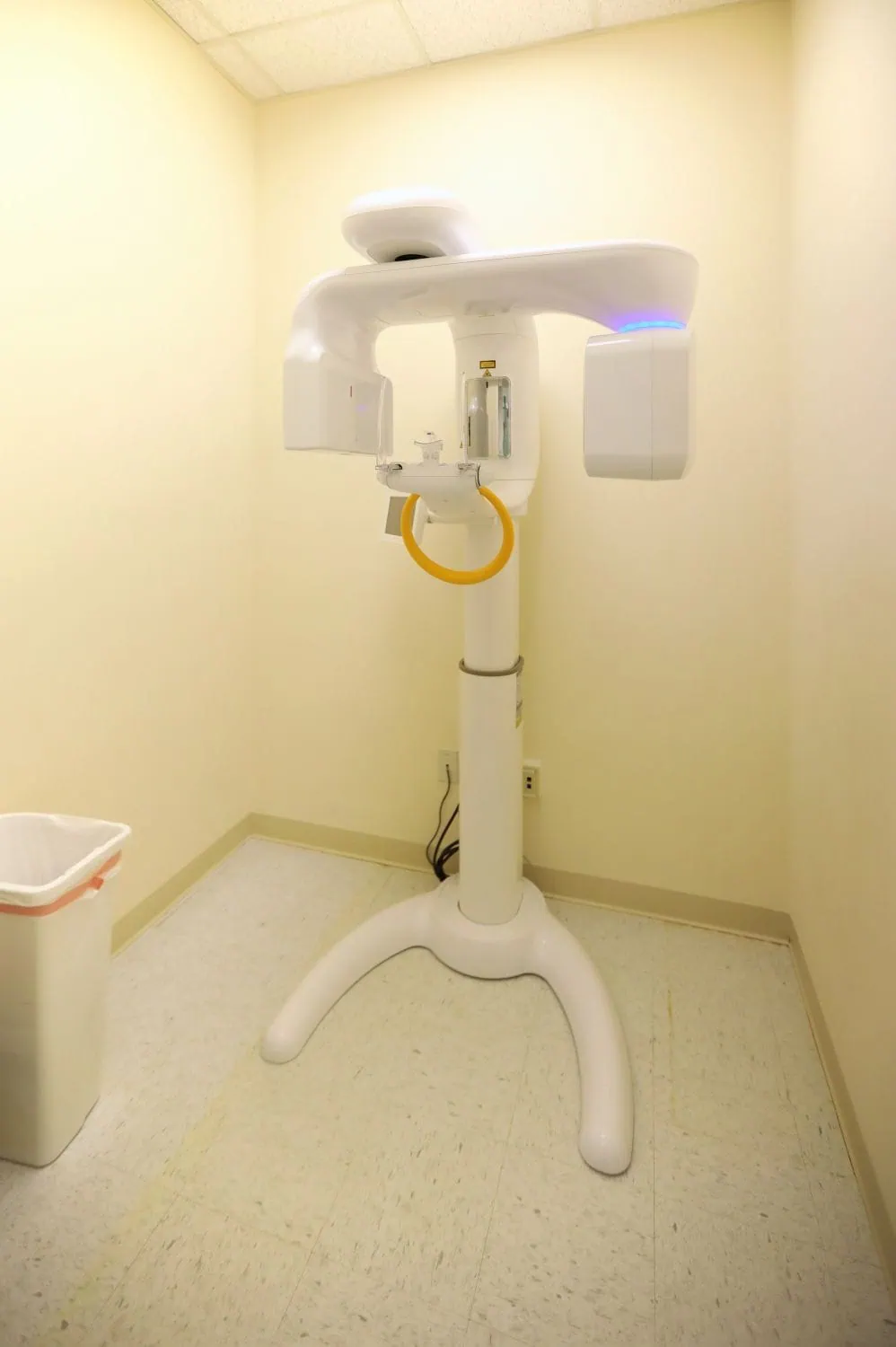
A fall, a ball or an elbow can knock a tooth loose, push it out of line, or knock it out completely. A knocked-out tooth is one of the few true emergencies in dentistry, and a loose tooth after an injury isn’t far behind. What you do in the first hour makes a real difference. We keep time open every weekday for emergencies here in Spring Hope, with 3D imaging in the office, so call or text (252) 478-3422 and we’ll get you in.
Reviewed by Dr. Elie Abboud, DDS. Based on the International Association of Dental Traumatology guidelines.
What to Do Right Now
Find your situation below, then call us, even if it doesn’t hurt much. A tooth can look fine and still have a cracked root or broken bone underneath.
If an adult tooth came all the way out
- Find the tooth and pick it up by the crown (the white part). Don’t touch the root.
- If it’s dirty, rinse it for a few seconds in milk, saline or your own saliva. Don’t scrub it or wipe it dry.
- Push it gently back into the socket, facing the right way, and bite on a clean cloth or gauze to hold it there.
- If it won’t go back in, put it in a cup of milk right away. No milk? Spit into a cup and keep it in your saliva.
- Call us and come straight in. Milk or saliva buys time, but not much.
If the tooth is loose or pushed out of place
- Leave it where it is. Don’t wiggle it or force it back into line.
- Bite gently on a clean cloth or gauze to slow the bleeding and keep the tooth still.
- Hold a cold pack on the outside of your lip or cheek.
- Take over-the-counter pain relief as the label directs.
- Skip anything hard, don’t bite with that tooth, and call us the same day.
If it’s a child’s baby tooth
Don’t put a knocked-out baby tooth back in. It can damage the adult tooth growing underneath it. Keep the tooth, press gauze on the spot to stop the bleeding, and call us so we can check the area.
Not sure if it’s a baby tooth or an adult one? Put it in milk and call.
Why minutes matter: the root of a tooth is covered in living cells that reattach it to the bone. Out of the mouth, they start drying out within minutes, and after about 30 minutes dry most of them are gone. Milk or saliva keeps them alive longer. Plain water is a poor last resort, and letting the tooth dry out is the worst option. Even when it’s been a while, an adult tooth is almost always worth putting back, so bring it with you.
Chipped, cracked or broken instead of loose? See our guides to a broken or cracked tooth, a toothache and a lost filling or crown, or our emergency dentistry page for everything else.
What Not to Do
A few very normal reactions make a tooth injury harder to fix. Skip these.
- Don’t hold it by the root. The root is covered in the cells that reattach the tooth. Hold the white part.
- Don’t scrub it, wipe it or let it dry. A few seconds of rinsing in milk, saline or saliva is all it needs.
- Don’t let it dry out or keep it in water. A dry tooth loses the cells it needs to reattach, and plain water is only a last resort. Milk is the easy, safe choice.
- Don’t wiggle a loose tooth to check it. Moving it disturbs the fibers that are trying to heal.
- Don’t wait it out. A loose tooth is easiest to put back early. As the area starts to heal, moving it gets harder.
- Don’t assume no pain means no problem. A cracked root or broken bone often hurts less than you’d expect.
- Don’t put a baby tooth back in. Save it and call us instead.
ER, Urgent Care or Dentist?
Go to the emergency room first if:
- You blacked out, even for a moment, or you have a bad headache, confusion, vomiting or trouble staying awake
- The bleeding won’t slow down with firm pressure
- Your jaw won’t close the way it normally does, or you think it’s broken
- You’re having trouble breathing or swallowing
- You can’t find the tooth and you’re coughing or wheezing, since it may have been inhaled
For everything else, call a dentist first. Emergency rooms and urgent care clinics are built for the rest of your body. They can check you for a concussion, close a cut, update a tetanus shot and help with pain, but most don’t have a dentist on hand, so they usually can’t reposition or splint a tooth. That’s exactly how the patient below ended up with us.
If you do go to the ER first, call or text us once you’re out and we’ll take it from there.
After hours or on a weekend? Text us at (252) 478-3422 and we’ll get back to you as soon as we’re open. If an adult tooth is knocked out, don’t wait for us. Put it back in yourself if you can (that one step matters most), or keep it in milk, and go to the nearest emergency room. A doctor there may be able to put it back in, and can check your tetanus shot and whether you need antibiotics. Then come see us as soon as we open.
A Real Case: A Front Tooth Knocked Loose
A college student came in with one of his top front teeth knocked loose. It hadn’t come all the way out, but it was moving when it shouldn’t. Before he got to us, he’d been to urgent care and then the emergency room. Both checked him over and told him the same thing: you need a dentist. He searched on Google, found us, and we saw him that same day.
Our 3D scan (CBCT) showed what a flat X-ray can miss. The thin plate of bone behind the tooth was cracked, which is why the tooth wouldn’t sit still. We splinted it to the two teeth on each side with Ribbond, a thin, woven fiber ribbon bonded to the back of the teeth, where it doesn’t show when he smiles. The healthy neighbors now hold it steady while the bone heals, a lot like a cast on a broken wrist.
From here he’ll come back for checkups over the next several weeks and months. We’ll test the tooth’s nerve at each visit, take the splint off once the bone has had time to knit, and keep an eye on the root for the next few years.
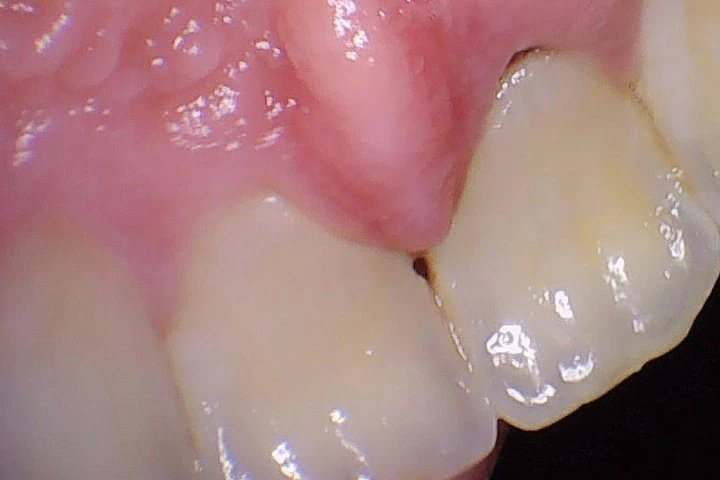
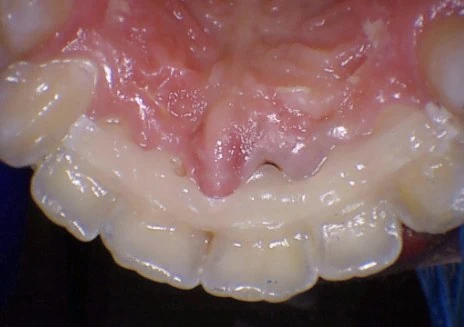
Actual patient of Spring Hope Family Dentistry, shared with his permission. Individual results may vary.
How We Treat a Loose or Knocked-Out Tooth
Every injury is a little different, but a visit for a tooth injury here usually goes like this.
- 1
We take a close look, in 3D when it helps
A regular X-ray flattens everything into one picture. When an injury could involve the root or the bone, our cone beam (CBCT) scanner shows the tooth, the root and the bone around it in three dimensions, so cracks are much easier to find.
- 2
We put the tooth back where it belongs
With the area numb, we gently guide a tooth that has moved back into its socket. A tooth that was knocked out gets cleaned and replanted.
- 3
We splint it to its neighbors
A thin splint bonded to the teeth on each side holds the injured tooth steady while it heals. It’s made to flex a little, because a small amount of natural movement helps the tissue around the root heal.
- 4
We check your bite
We make sure the injured tooth isn’t taking a hit every time you close your mouth.
- 5
We test the nerve and plan your follow-ups
We record how the tooth responds today, so we can compare at every visit and catch a problem early.
How Long Does a Splint Stay On?
It depends on what the injury did to the tooth and the bone around it. These are the typical times from the International Association of Dental Traumatology guidelines. Your own plan depends on what we find.
| What happened to the tooth | Typical splint time |
|---|---|
| Sore and a little loose, but hasn’t movedSubluxation | Often none. Up to 2 weeks if it’s very loose or sore to bite on |
| Pushed partly out, so it looks longerExtrusion | 2 weeks, plus about 4 more if the bone at the gumline is broken |
| Pushed back, forward or sidewaysLateral luxation | 4 weeks, sometimes longer if the socket wall is broken |
| Knocked out and put back inAvulsion | 2 weeks, or about 4 if the bone is broken too |
| A crack through the bone that holds the teethAlveolar fracture | 4 weeks |
| A crack in the rootRoot fracture | 4 weeks, up to 4 months if the crack is near the gumline |
Sources: IADT guidelines for fractures and luxations and avulsion of permanent teeth, Dental Traumatology, 2020.
Recovery at Home
The first two weeks are about keeping the area clean and letting the tooth rest.
- Eat soft foods for up to two weeks and chew with your back teeth.
- Don’t bite into anything with your front teeth, like sandwiches, apples or corn on the cob.
- Brush gently with a soft toothbrush after every meal, around the splint too.
- If we prescribe an antibacterial rinse (chlorhexidine), use it twice a day for as long as we tell you, usually two weeks.
- Sit out contact sports until we clear you, then wear a mouthguard.
- Use over-the-counter pain relief as directed, and a cold pack the first day or two.
- Leave the splint alone. If it breaks or comes loose, call us.
Why the Follow-Up Visits Matter
An injured tooth can look fine and still be in trouble on the inside. The nerve and blood supply enter through a tiny opening at the tip of the root, and a hard hit can stretch or tear them. When the nerve dies, it doesn’t always hurt. It’s also common for a healing tooth to stop responding to our cold test for a few months and then recover, so we watch it over time instead of guessing on day one.
Teeth that were moved or knocked out usually get checked at about 2, 4 and 8 weeks, then at 3 months, 6 months and 1 year, then once a year for at least five years. The exact schedule depends on the injury, and minor bumps need fewer visits.
If you’re an adult and the tooth was pushed out of position or knocked out, the nerve often doesn’t survive. In those cases a root canal, often started within the first two weeks, protects the root from infection and gives the tooth its best chance. If a tooth can’t be saved, we’ll walk you through replacing it, including a single-tooth implant once the jaw has finished growing.
Call us between visits if you notice:
- The tooth turning gray or darker than its neighbors
- A pimple or bump on the gum above the tooth
- Swelling, or pain when you bite or tap on it
- The tooth getting looser in the weeks after the splint comes off
Dr. Abboud’s Take
“If you blacked out or have signs of a head injury, the ER is the right first stop. But for the tooth itself, they’ll almost always send you to a dentist, and that detour costs time the tooth doesn’t have. If a tooth is loose or knocked out, call us first. The sooner we see it, the easier it is to put back and the better its chances.”
Frequently Asked Questions
Can a loose tooth tighten back up on its own?
Sometimes. A tooth that’s only a little loose after a bump often firms up over a week or two as the tissue around the root heals. A tooth that has moved, feels very loose, or sits in cracked bone usually needs to be put back in place and splinted. You can’t tell which one you have by looking at it, so have it checked the same day.
How long does a splint stay on a loose tooth?
If one is needed, usually two to four weeks. A tooth that was knocked out and put back, or pushed partly out, typically needs about two. A tooth pushed sideways, or one sitting in broken bone, needs about four, and a pushed-out tooth with broken bone at the gumline about six. A cracked root near the gumline can need up to four months. A tooth that’s only slightly loose often needs no splint at all.
Will my tooth die after it’s been knocked loose?
It might, and it can take weeks or months to show. The risk is highest when an adult tooth is pushed out of position or knocked out, because the nerve enters through a tiny opening at the tip of the root and can tear. That’s why we test the tooth at every follow-up visit. If the nerve does die, a root canal can often keep the tooth, although a tooth that was knocked out can still be lost over time.
Should I go to the ER for a knocked-out tooth?
Go to the ER first if you blacked out or have signs of a head injury like a bad headache, confusion or vomiting, if the bleeding won’t stop, if your jaw won’t close normally, if you’re having trouble breathing or swallowing, or if you can’t find the tooth and you’re coughing. Otherwise, call a dentist first, because most ERs don’t have a dentist on hand. If we’re closed, put the tooth back in or keep it in milk, and go to the ER so a doctor can see you right away.
How long do I have to save a knocked-out tooth?
As little time as possible. A tooth that goes back in within about 15 minutes has the best chance. If it can’t go back in, get it into milk or saliva right away. That buys time, but come straight in. Even when it’s been longer, an adult tooth is almost always worth putting back, so bring it with you.
Does a splint hurt? Can I eat with it?
The splint itself doesn’t hurt. The tooth will be sore for a few days from the injury. You can eat, just stick to soft foods for up to two weeks, chew with your back teeth, and don’t bite into anything with the injured tooth.
What does it cost to treat a knocked-out or loose tooth?
For new patients, the emergency exam and X-ray is $99, and VIP Plan members get one emergency exam a year included. If you need a 3D scan, a splint or other treatment, you’ll get the exact price in writing before we start, and we’ll file your insurance for you.
Do I have to be a patient of yours to be seen?
No. Call or text (252) 478-3422, tell us what happened, and we’ll do our best to see you the same day. We see emergency patients from Spring Hope, Nashville, Rocky Mount, Wilson and the towns around them.
How can I protect my teeth during sports?
Wear a mouthguard for any contact sport. A custom-fit guard from your dentist fits better and stays in place better than a store-bought one, so you’re more likely to actually wear it. Ask us about one at your next visit.
Tooth Injuries From Spring Hope and Nearby Towns
We see tooth injuries from Spring Hope, Nashville (about 10 minutes), Rocky Mount (about 15), Wilson (about 20), Zebulon, Bailey and Middlesex, Bunn, Louisburg, Castalia, Elm City and Lake Royale. Call ahead and we’ll have a room ready.
Injured a Tooth? Call Us First.
We keep time open every weekday for emergencies. The sooner we see an injured tooth, the more options it has.