
The question people ask most quietly at a veneer consultation is not about the price. It is “how much of my real tooth do you have to drill away?” It is a fair question, and in Spring Hope, NC, our answer is often: far less than you think — and for the right cases, almost none.
No-prep and minimal-prep veneers are exactly what they sound like. Instead of reshaping the tooth to make room for a veneer, we bond an ultra-thin veneer over the tooth largely as it is, keeping the enamel you were born with.
What No-Prep And Minimal-Prep Actually Mean
No-prep veneers are bonded to the tooth with no drilling and usually no numbing. The veneer is made thin enough that it can sit on the natural tooth surface without making the tooth look bulky.
Minimal-prep veneers involve a light polish of the enamel — measured in fractions of a millimeter — to give the veneer an invisible edge and keep the final shape slim and natural. Most of the enamel stays untouched.
Compare that with a traditional veneer preparation, where a thin but real layer of enamel is removed so a standard-thickness veneer sits flush. That approach is still the right call for many smiles, but it is a permanent commitment: enamel does not grow back.
Why Keeping Enamel Matters
Enamel is the strongest thing your body makes, and veneers bond to it better than to anything else. The more enamel we preserve, the stronger the bond, the healthier the tooth stays long-term, and the more options you keep for decades down the road. That is the whole philosophy: change the smile, protect the tooth.
Who Is A Good Candidate?
No-prep and minimal-prep veneers work best when your natural teeth are on the smaller side, slightly worn, set back, or have gaps to close — situations where adding a thin layer improves the smile. They are also a natural fit for people who want a dramatic result but are not ready to commit to drilling healthy teeth.
They are usually not the right tool when teeth stick out too far, are heavily overlapped, or are very dark, because covering those without any reshaping can leave teeth looking bulky or opaque. In those cases a conventional veneer, clear aligners first, or a different plan entirely will give you a better result — and we will tell you which one honestly.
The honest truth is that candidacy is a planning question, not a product question. Dr. Abboud plans smiles using the design-first approach he trained in through the Kois Center, one of dentistry’s most respected postgraduate programs — which means the decision about how much (or how little) preparation your teeth need is made on a digital design of your finished smile, not guessed at the chair.
How We Do It In Spring Hope
1. Free cosmetic consultation. Digital scan, photos, and a straight conversation about what you want to change.
2. Smile design. We design the final result first, then work backwards to how little preparation gets us there. Want to be sure before you commit? Our $300 smile trial lets you wear a 3D-printed preview home for a few days, fully credited toward treatment.
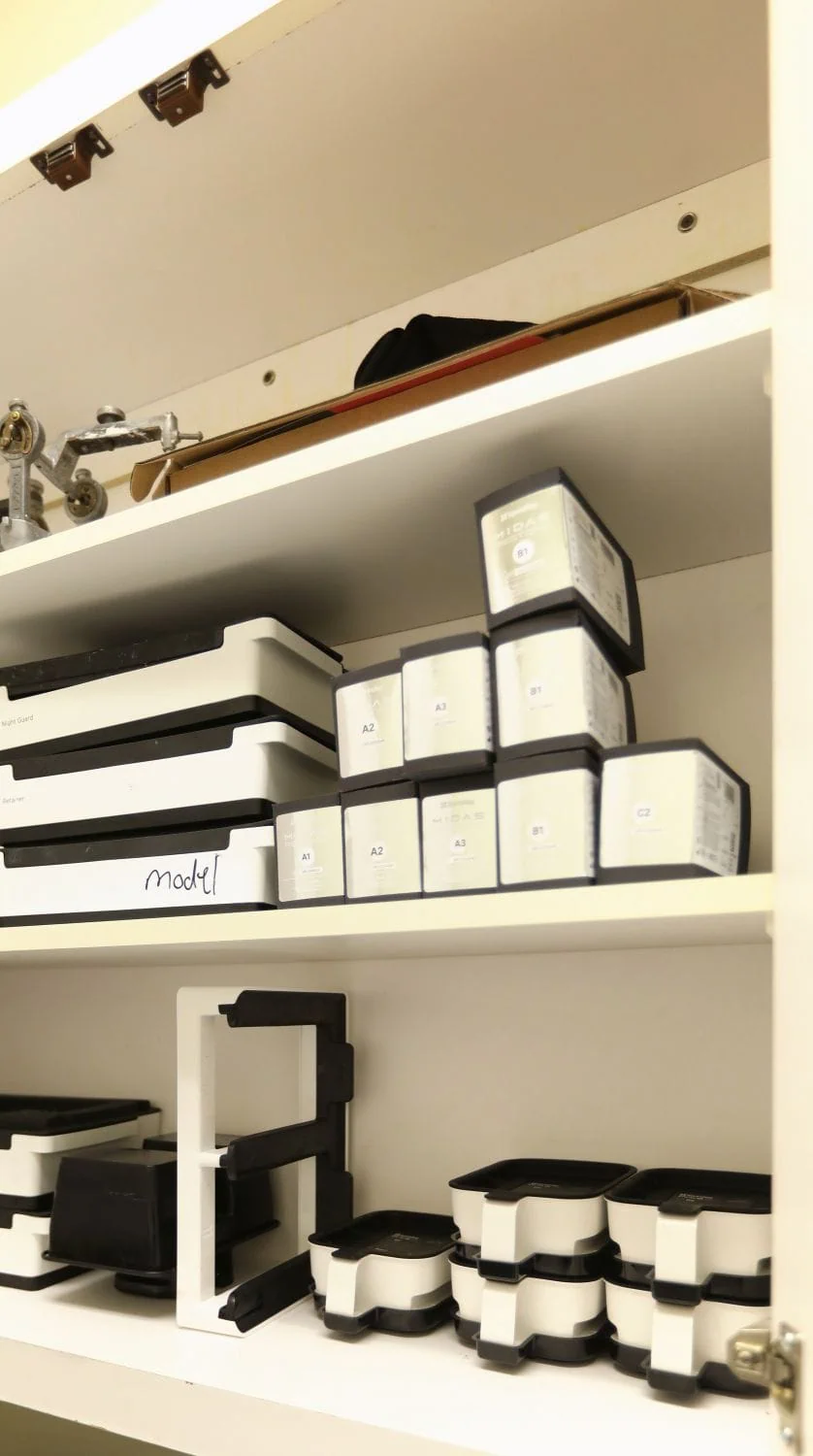
3. The veneers. Depending on your case and goals, your veneers can be printed in-house from our MIDAS material or made by an outside porcelain lab.
4. Bonding. For true no-prep cases this visit is usually needle-free: clean, bond, polish, done.
Dr. Abboud’s Take
No-prep veneers are the rare case where the better option is also the easier one. We add to your teeth instead of drilling them down: no numbing, no temporaries, and your enamel stays yours, so every future option stays open.
Less work is also why it’s our least expensive veneer. Not every smile qualifies, and forcing it gives you bulky teeth. One free scan tells you which case you are before you spend anything.
Elie Abboud, DDS
Frequently Asked Questions
Are no-prep veneers reversible?
They are the most conservative veneer option because the enamel underneath stays intact. Removing them later still requires a dentist and some polishing, so we treat every veneer as a long-term decision — but you keep far more options than with a conventional preparation.
Do no-prep veneers look bulky?
On the right teeth, no. That is exactly what the design phase determines. If your teeth would look bulky without reshaping, we will show you that on the design and recommend minimal-prep or a different plan instead.
Do they hurt?
True no-prep cases usually need no numbing at all. Minimal-prep cases involve only a light enamel polish and are gentle by design.
How long do they last?
Like any veneer, it depends on material, your bite, and how you care for them. Because they bond to intact enamel, adhesion is excellent. We give you a realistic expectation for your specific case at your consultation.
Are they cheaper than regular veneers?
The fee depends on the case and material rather than the preparation style. See our veneer cost guide for how veneer pricing works here.
Keep Your Enamel. Change Your Smile.
Call or text (252) 478-3422 for a free cosmetic consultation and find out how conservative your smile makeover can be. We see patients from Spring Hope, Rocky Mount, Nashville, Wilson, and across Nash County.
Ready When You Are
Reserve online in under a minute, and we file your insurance for you.