If you’re deciding between CandidPro and Invisalign, here’s our straight answer: both are quality clear aligner systems, and both can give you a straighter smile. For the everyday case that most people have, we use CandidPro at Spring Hope Family Dentistry, and we’re happy to show you why. This isn’t about one being “bad.” It’s about which one gives most patients the better experience for the correction they actually need.
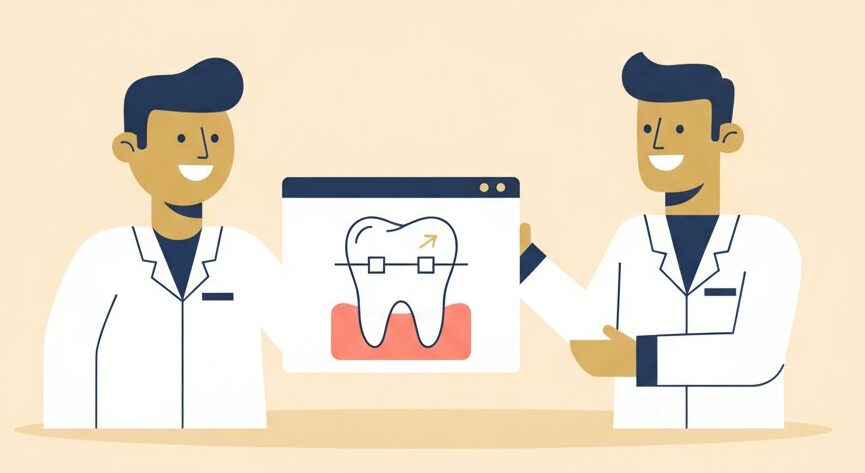
Both are good clear aligners
Let’s be fair right up front. Invisalign is a well-made, widely trusted system with a long track record, and it treats a very wide range of cases, from mild through complex and severe. CandidPro is a newer system built around a licensed orthodontist reviewing every plan, plus at-home monitoring the whole way. In the doctor-directed model, with IPR, attachments, and elastics when needed, it treats mild through many complex cases, which is most of the smiles we see, and gets the same kind of straight result with a few real advantages. For the most severe cases, like a significant skeletal or jaw discrepancy, we’ll point you toward the option with more range.
The honest comparison
Here’s how the two systems line up for a typical everyday case. Every cell here is factual, not spin.
| CandidPro (what we use) | Invisalign | |
|---|---|---|
| Treatment planning | A US-based licensed orthodontist reviews every plan | An initial ClinCheck plan is generated by technicians and software, then approved by the provider |
| Attachments (“buttons”) | Tends to use fewer | Often uses more for added leverage |
| Enamel reduction (IPR) | Method is designed to use less | Routinely plans IPR |
| Monitoring | At-home; scan by phone every 2 weeks | In-office checkups every 6 to 8 weeks |
| Office visits | About 3 to 5 total | More frequent |
| Typical timeline | 6 to 8 months | 12 to 18 months |
| Case range | Mild through many complex cases (IPR, attachments, elastics) | Mild through severe, including significant skeletal cases |
| Where you’re treated | A full dental office that also handles cleanings and cavities | Often an orthodontist-only office |
A note on that last row: Invisalign’s breadth is a genuine strength for the most severe cases. But for the cases we treat, which run from mild through many complex ones, CandidPro’s shorter timeline and fewer visits are a real benefit, not a shortcut.
A licensed orthodontist reviews your plan, not just software
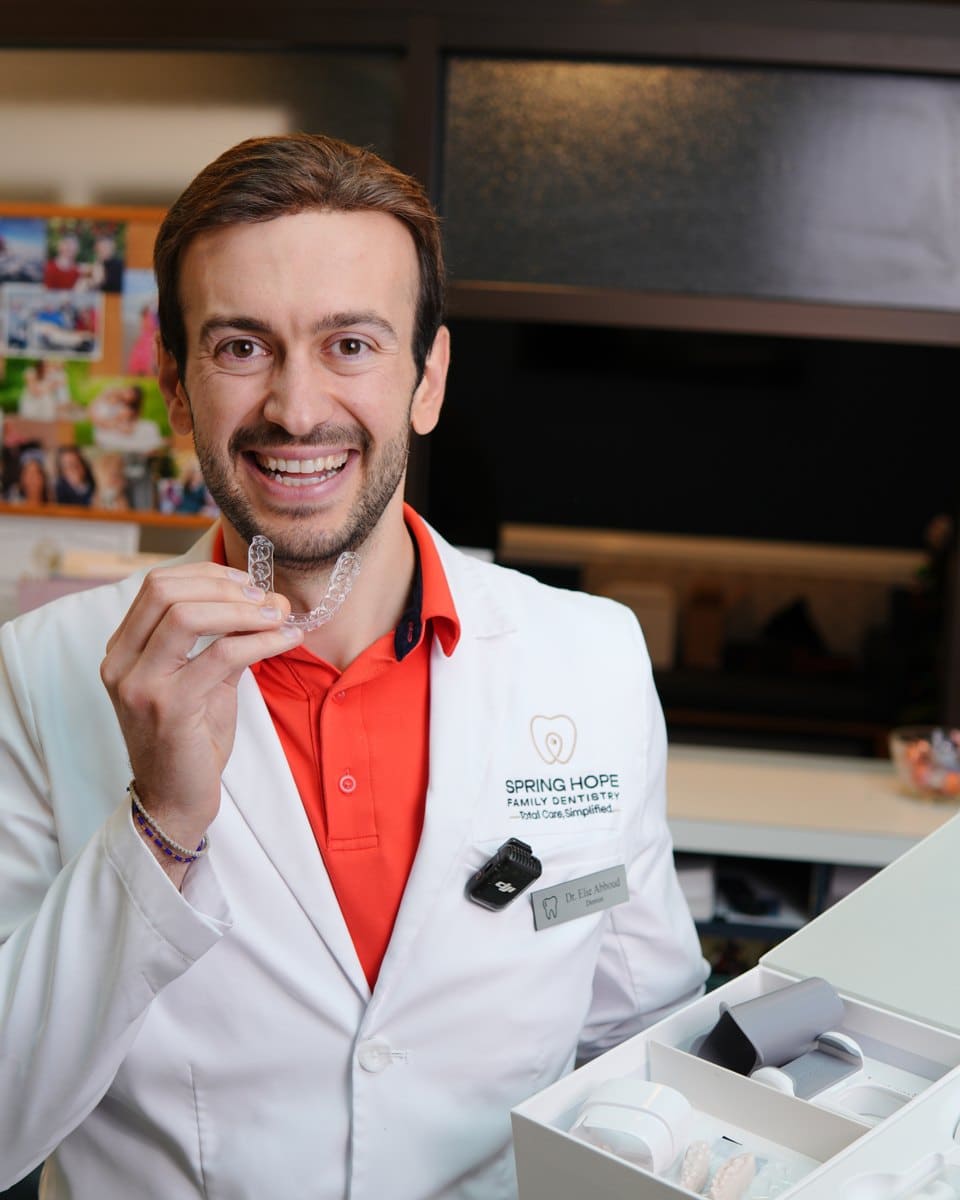
This is the difference we care about most. With CandidPro, a US-based licensed orthodontist reviews your treatment plan before you ever start moving teeth, alongside Dr. Abboud. You get orthodontic expertise without being funneled into an orthodontist-only office an hour away.
With Invisalign, the initial plan is generated by trained technicians and planning software, then approved by the treating provider. Plenty of skilled dentists and orthodontists use it beautifully. The point is simply that with CandidPro, an orthodontist’s review of your specific plan is built in by default: two sets of trained eyes on your teeth, every case.
Fewer attachments and less enamel reduction
Two quick definitions. “Attachments” (buttons) are little tooth-colored bumps bonded to your teeth so the aligners have something to grip, and IPR is lightly polishing a sliver of enamel between teeth to make room. CandidPro is designed to use fewer attachments and less IPR than Invisalign typically plans. Neither is harmful when done correctly, but for the everyday case, less of both is a fair thing to prefer, and it usually means a smoother look with less to clean around.
When Invisalign or braces is the better call
We won’t sell you something that won’t work. For the most severe cases, like a significant jaw or skeletal discrepancy or the most severe crowding, CandidPro isn’t the right tool, and we’ll tell you that plainly. Invisalign’s comprehensive option or traditional braces have more range, and the right result matters more to us than getting you into aligners. Your free 3D scan and an orthodontist’s review show us where you stand, usually in about twenty minutes. See Am I a Candidate?, or if you’re weighing trays against metal, read Clear Aligners vs Braces.
One office for your whole mouth
This advantage has nothing to do with the aligner brand and everything to do with where you get treated. We’re a full dental office. If a cavity shows up halfway through treatment, we catch it on a checkup scan and fix it right here. An orthodontist-only office can’t; they send you elsewhere while your treatment waits. You shouldn’t move teeth through decay, so having your dentist watch the whole picture keeps you on schedule and your mouth healthy. Straight teeth and a dentist who handles everything, in the same town you already live in.
We also monitor most of your progress from home: you scan your teeth with your phone every couple of weeks, we review it, and we catch anything off early without you driving in for a five-minute look. More on that on our Remote Monitoring page.
The price, published
One more honest thing. Most clear aligner and Invisalign prices around here really land north of $6,000 once a “$1,000 off” comes off a number nobody showed you. We just tell you: our CandidPro treatment is $4,799 all-in (from our published $5,799). That covers all your aligners, every visit, at-home monitoring, your retainers, and free take-home whitening, plus a free 3D scan, consultation, and panoramic X-ray. Nothing gets added later. Read the full breakdown on our clear aligners page, and learn more about the system at candidpro.com.
Dr. Abboud’s Take
“Patients often ask which is better, and here’s my honest answer: for the everyday case most people have, I prefer CandidPro. It typically uses fewer attachments on your teeth and less enamel reduction than Invisalign, and a licensed orthodontist reviews your plan, not just software. Combined with at-home monitoring that follows your progress the entire way, it’s simply the better experience for most smiles. The exception is the most severe cases, like a significant jaw or skeletal discrepancy, where an orthodontist has more range, and I’ll always tell you honestly if that’s your situation.”
Frequently Asked Questions
Is CandidPro as good as Invisalign?
For most cases, yes, and often with fewer visits and a shorter timeline. Both are quality clear aligners. Your CandidPro plan is reviewed by a licensed orthodontist, and we monitor you the whole way. With IPR, attachments, and elastics we treat mild through many complex cases, and for the most severe cases we’ll tell you honestly if another option fits better.
Who plans my treatment?
A US-based licensed orthodontist reviews your CandidPro plan before you start, working alongside Dr. Abboud. You get orthodontic expertise on your case right here at a full dental office, without the drive to an orthodontist-only practice.
Does CandidPro use attachments and IPR?
Sometimes, but the system is designed to use fewer attachments and less enamel reduction than many treatments call for. If your case needs either one to get the result right, we’ll explain why before we begin.
Can CandidPro fix complex cases?
Yes, in many cases. With interproximal reduction (IPR), attachments, and elastics, we treat mild through many complex cases in the doctor-directed model. We refer only the most severe cases, like significant skeletal or jaw discrepancies, to an orthodontist.
How much does it cost here?
$4,799 all-in, from our published $5,799, with everything included: all aligners, visits, monitoring, retainers, and whitening. VIP Plan members pay less, and we offer financing through Cherry, Sunbit, and CareCredit plus an in-house plan.
Ready to see if you’re a candidate?
Your consultation and 3D scan are free, and you’ll leave knowing your exact all-in price. Call or text (252) 478-3422 or reserve online. We take a limited number of New Smile Voucher spots each round.
Spring Hope Family Dentistry straightens smiles for patients across Nash County, including Rocky Mount, Nashville, Wilson, Bailey, Middlesex, Elm City, Zebulon, and Bunn.